concept record in category ruby

This is an excerpt from Manning's book Rails 4 in Action: Revised Edition of Rails 3 in Action.
Inside respond_to is an if statement that calls @purchase.save. This method validates the record; and if it’s valid, the method saves the record to the database and returns true.
In Rails, delete is given a much more forceful name: destroy. This is another sensible name, because to destroy a record is to “put an end to the existence of.”[4] Once this record’s gone, it’s gone, baby, gone.
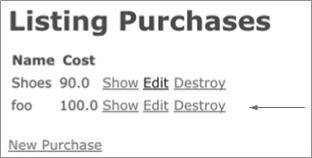
You can destroy a record by going to http://localhost:3000/purchases and clicking the “Destroy” link shown in figure 1.11 and then clicking OK in the confirmation box that pops up.
When that record’s destroyed, you’re taken back to the Listing Purchases page. You’ll see that the record no longer exists. You should now have only one record, as shown in figure 1.12.

This is an excerpt from Manning's book Rails 3 in Action.
In Rails, delete is given a much more forceful name: destroy. This is another sensible name because to destroy a record is to put an end to its existence.[16] Once this record’s gone, it’s gone, baby, gone.
Here you’ve seen an easy way to add pagination links to resources in your application by using the Kaminari gem. You could have used the will_paginate gem and that would have worked just as easily. It’s really up to personal preference. Pagination allows you to ease the load on the database server by returning only limited amounts of records per page, and also doesn’t overwhelm the user with choices.