concept JavaScript in category rxjs

This is an excerpt from Manning's book RxJS in Action.
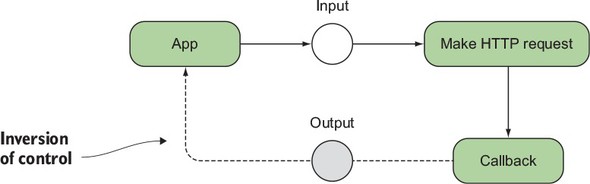
Reactive Extensions for JavaScript (RxJS) is an elegant replacement for callback or Promise-based libraries, using a single programming model that treats any ubiquitous source of events—whether it be reading a file, making an HTTP call, clicking a button, or moving the mouse—in the exact same manner. For example, instead of handling each mouse event independently with a callback, with RxJS you handle all of them combined.
RxJS comes bundled with many of the tools to inspect and manipulate time right out of the box (in chapter 9, you’ll learn how to work with virtual time in unit tests, essentially by mocking time). Before we dive into these new operators, let’s review JavaScript’s own timing mechanisms and how they can easily interact with RxJS.
There are two well-known interfaces for accomplishing explicit timing in JavaScript (there are actually several more, but they’re not universal so we’ll leave them out for now). Both methods use time relatively; that is, all declarations of future tasks will be done by a time offset relative to the current time (“now”) within the application. For instance, if you show a countdown clock for an action that is to be completed within 3 seconds, this action would complete in 3 seconds relative to the execution of the timed operator in use (or now + 3 sec), as shown in figure 4.4.