concept network in category sails

This is an excerpt from Manning's book Sails.js in Action.
JSON is called a lightweight data-interchange format. What that means for you is it’s a way to safely transfer data from the client to the server and vice versa. In Node.js or the browser, you can take almost any JavaScript value stored in memory (for example, a variable containing a dictionary with an email address, password, and username) and stringify it, converting it into a specially encoded string. That string can then be transported over the network from the backend to the frontend or vice versa. On the receiving end, the JSON string is parsed back into the original JavaScript value.
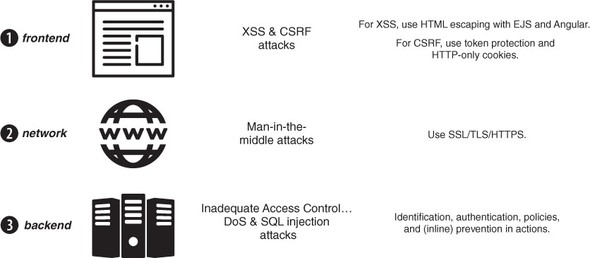
The network layer is also outside your control and subject to changes. Again, you have to protect against the possibility that someone could intercept and change your requests/responses before they reach the user-agent or server. Finally, unlike the browser user-agent or network, you can reasonably expect that what you create on the backend won’t change without your consent. That doesn’t mean you can’t create unwanted vulnerabilities. It just means that whatever you’ve baked in won’t be subject to change.