concept Sails in category sails
appears as: Sails

This is an excerpt from Manning's book Sails.js in Action.
100% JavaScript— Like other MVC frameworks, Sails is built with an emphasis on developer happiness and a convention-over-configuration philosophy. But Node.js takes this principle to the next level. Building on top of Sails means your app is written entirely in JavaScript, the language you and your team are already using in the browser. Because you spend less time shifting context, you’re able to write code in a more consistent style, which makes development more productive and fun.
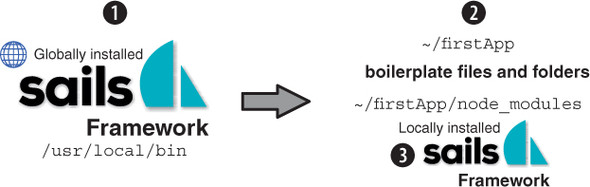
 generated a new Sails application
 and installed itself as a dependency of the new project
 .
This chapter will help you answer those questions and explore in detail ways Sails can deliver frontend assets in a web application. Many great libraries and frameworks work well with Sails. We chose jQuery as a proxy for client-side DOM manipulation tools and Angular as a proxy for client-side frameworks. In this chapter, we’ll use both to demonstrate how to integrate DOM manipulation tools like jQuery and client-side JavaScript frameworks into the static asset pipeline. The remaining chapters will focus on Angular on the frontend.