concept HTTPS in category security

This is an excerpt from Manning's book API Security in Action.
HTTPS is the name for HTTP running over a secure connection. While normal HTTP requests and responses are visible to anybody watching the network traffic, HTTPS messages are hidden and protected by Transport Layer Security (TLS, also known as SSL). You will learn how to enable HTTPS for an API in chapter 3.
In this case, sending passwords in clear text is a pretty big vulnerability, so let’s fix that by enabling HTTPS. HTTPS is normal HTTP, but the connection occurs over Transport Layer Security (TLS), which provides encryption and integrity protection. Once correctly configured, TLS is largely transparent to the API as it occurs at a lower level in the protocol stack and the API still sees normal requests and responses. Figure 3.5 shows how HTTPS fits into the picture, protecting the connections between your users and the API.
In addition to protecting data in transit (on the way to and from our application), you should also consider protecting any sensitive data at rest, when it is stored in your application’s database. Many different people may have access to the database, as a legitimate part of their job, or due to gaining illegitimate access to it through some other vulnerability. For this reason, you should also consider encrypting private data in the database, as shown in figure 3.5. In this chapter, we will focus on protecting data in transit with HTTPS and discuss encrypting data in the database in chapter 5.
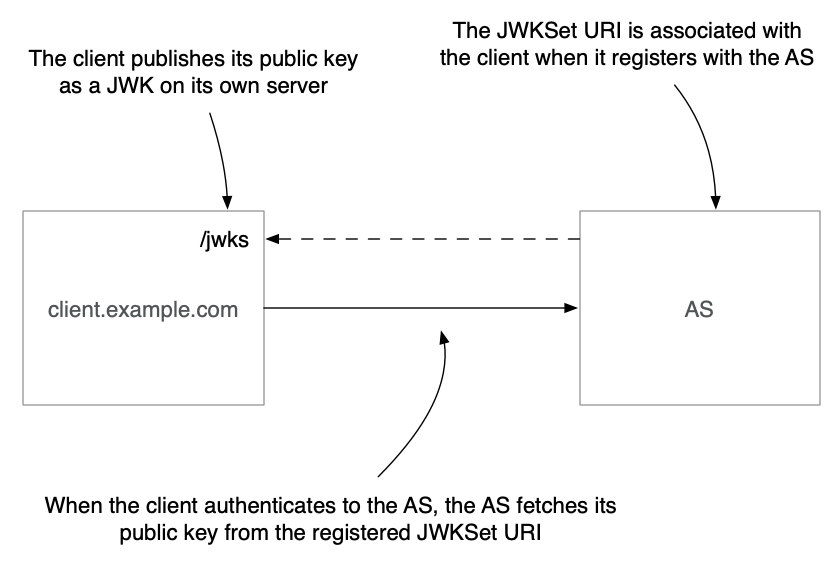
Figure 11.3 The client publishes its public key to a URI it controls and registers this URI with the AS. When the client authenticates, the AS will retrieve its public key over HTTPS from the registered URI. The client can publish a new public key whenever it wants to change the key.