concept link in category security

This is an excerpt from Manning's book API Security in Action.
The moderator API contains a single operation to delete a message by sending a DELETE request to the message URI. A Postman collection to help you use the API is available from https://www.getpostman.com/collections/ef49c7f5cba0737ecdfd. To import the collection in Postman, go to File then Import and select the Link tab. Then enter the link and click Continue.
In chapter 8 you implemented identity-based access controls that represent the mainstream approach to access control in modern API design. Sometimes identity-based access controls can come into conflict with other principles of secure API design. For example, if a Natter user wishes to share a message that they wrote with a wider audience, they would like to be able to just copy a link to it. But this won’t work unless the users they are sharing the link with are also members of the Natter social space it was posted to, because they won’t be granted access. The only way to grant those users access to that message is to either make them members of the space, which violates the principle of least authority (because they now have access to all the messages in that space), or else to copy and paste the whole message into a different system.
The desire to share access to private resources simply by sharing a URI is not new. For a long time, browsers supported encoding a username and password into a HTTP URL in the form http://alice:secret@example.com/resource
. When such a link was clicked, the browser would send the username and password using HTTP Basic authentication (see chapter 3). Though convenient, this is widely considered to be a security disaster. For a start, sharing a username and password provides full access to your account to anybody who sees the URI. Secondly, attackers soon realized that this could be used to create convincing phishing links such as http://www.google.com:80@evil.example.com/login.html
. An unsuspecting user would see the google.com domain at the start of the link and assume it was genuine, when in fact this is just a username and they will really be sent to a fake login page on the attacker’s site. To prevent these attacks browser vendors have stopped supporting this URI syntax and most now aggressively remove login information when displaying or following such links. Although capability URIs are significantly more secure than directly sharing a password, you should still be aware of any potential for misuse if you display URIs to users.
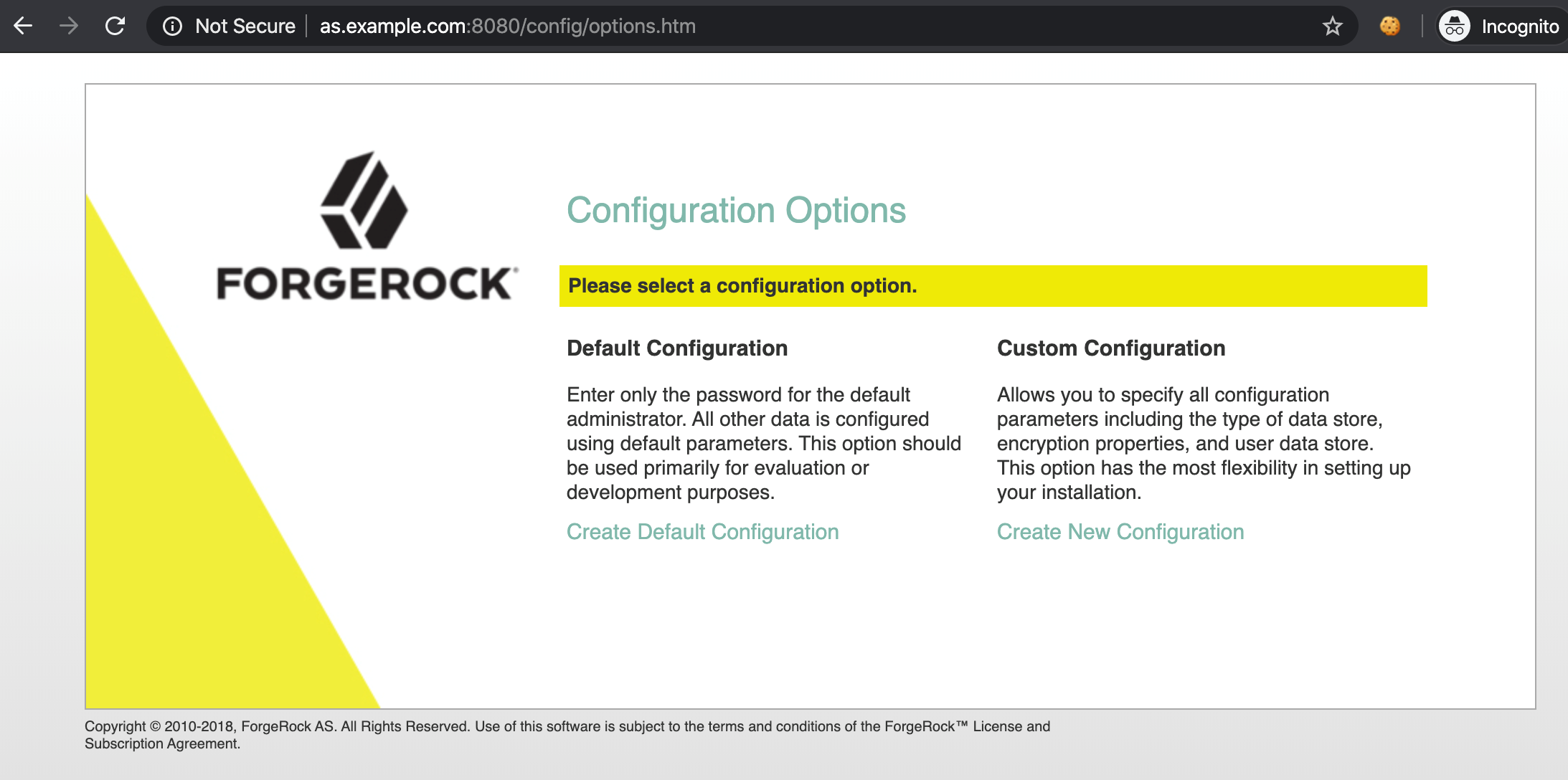
Figure A.1 The ForgeRock AM installation screen. Click on the link to Create Default Configuration.