concept pod in category security

This is an excerpt from Manning's book API Security in Action.
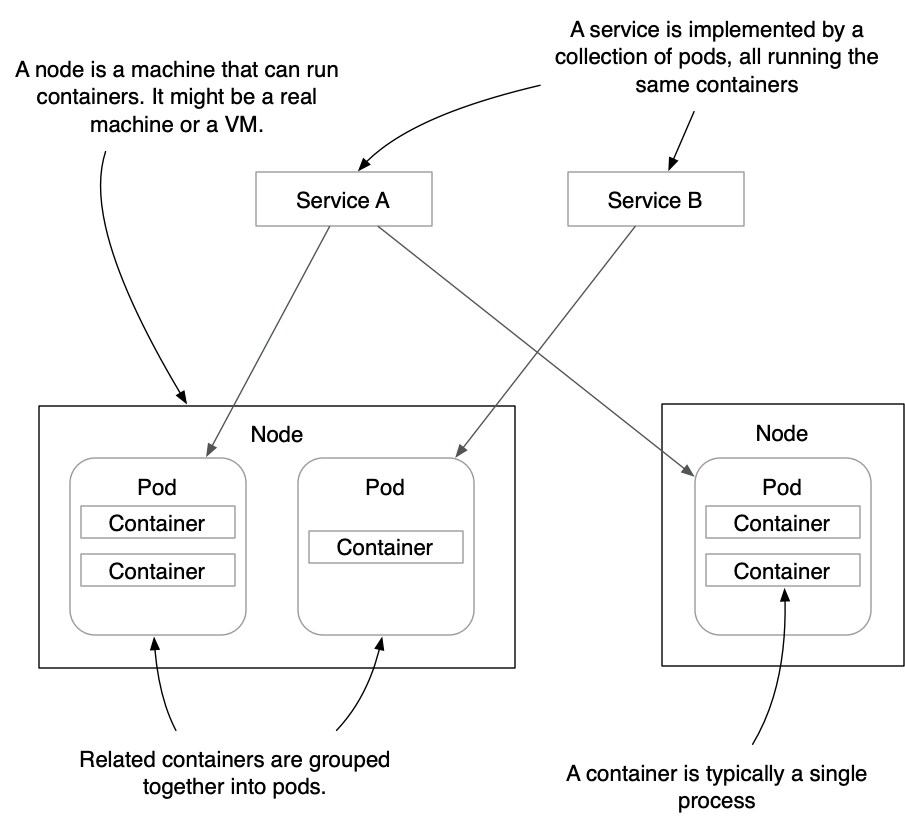
The basic concepts of Kubernetes relevant to deploying an API are shown in figure 10.2. A Kubernetes cluster consists of a set of nodes, which are either physical or virtual machines (VMs) running the Kubernetes software. When you deploy an app to the cluster, Kubernetes replicates the app across nodes to achieve availability and scalability requirements that you specify. For example, you might specify that you always require at least three copies of your app to be running, so that if one fails the other two can handle the load. Kubernetes takes care of ensuring these availability goals are always satisfied and redistributing apps as nodes are added or removed from the cluster. An app is implemented by one or more pods, which encapsulate the software needed to run that app. A pod is itself made up of one or more Linux containers, each typically running a single process such as an HTTP API server.
A Kubernetes node is a physical or virtual machine that forms part of the Kubernetes cluster. Each node runs one or more pods that implement apps running on the cluster. A pod is itself a collection of Linux containers and each container runs a single process such as an HTTP server.
Figure 10.2 In Kubernetes an app is implemented by one or more identical pods running on physical or virtual machines known as nodes. A pod is itself a collection of Linux containers, each of which typically has a single process running within it, such as an API server.
$ kubectl get pods --namespace=natter-api