concept BDD in category software development

This is an excerpt from Manning's book Agile ALM: Lightweight tools and Agile strategies.
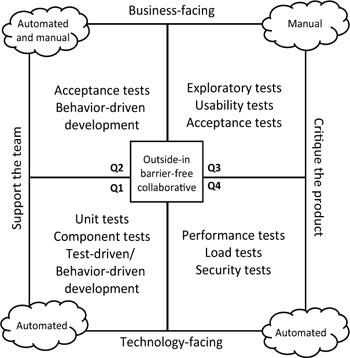
Behavior-driven development (BDD) is a vehicle for expressing the behavior of the application that can then be coded as automated tests. BDD focuses on example scenarios of how to use the developed application. Basing the written tests on example use cases is often referred to as specification by example.
Essential aspects of writing tests collaboratively include writing good acceptance tests, using the language of the domain expert, keeping the tests in an executable form, and considering behavior-driven development (BDD). Acceptance tests define the expectations of the customer (the person with the money) or the user (the person who is affected by or affects the product), or both. Writing acceptance tests in a ubiquitous language and in an executable way fosters outside-in development, further improves collaboration, and leads to better and more meaningful feedback loops. BDD is another way to apply outside-in development.