concept glossary in category software development
This is an excerpt from Manning's book Writing Great Specifications: Using Specification by Example and Gherkin.
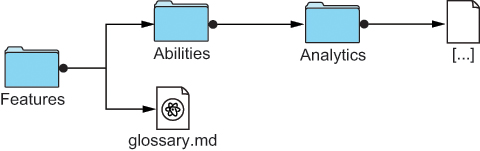
Another approach is to quit writing definitions in the briefs and instead create a separate file in the specification suite that contains all the definitions. Such a file can function as the project’s glossary. It doesn’t even have to be written in Gherkin; if you write a simple .txt file (or perhaps a .md document formatted in Markdown), every test runner will ignore it during validation. I’ve used glossaries several times and been happy with the results, especially in projects with complex domains where concepts required frequent clarification. The downside of having a glossary is that maintaining it requires additional effort; a plain text file isn’t connected to the automation system that keeps the living documentation up to date. Whenever you change a scenario in a way that redefines a corresponding domain concept, you must remember to update its definition in the glossary—which is more difficult because the definition is no longer in the same file and can’t serve as an obvious reminder.