concept small increment in category software development
appears as: small increments

This is an excerpt from Manning's book Test Driven: Practical TDD and Acceptance TDD for Java Developers.
Before we go there, though, let’s explore the big picture of developing software in small increments.
Figure 1.6. With incremental development—building the whole system in small increments—we are never far from an integrated, working code base. This reduces risk, because the inventory of unfinished work remains small. As we’ll learn later on, incremental development also enables effective learning through early feedback based on the customer and developers constantly seeing actual, working software.
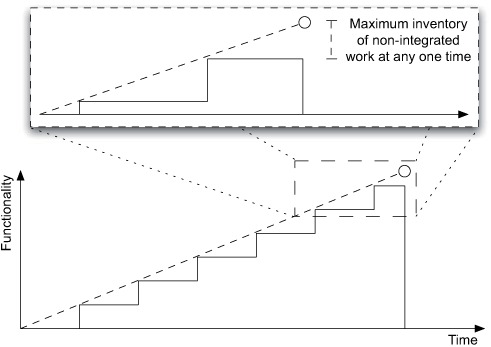
Too many projects have pushed back their deadline again and again, eventually getting canceled, without delivering a single line of working code. By building your product in small increments, iteration by iteration, you don’t have to worry about not making the deadline because you have a working (albeit not feature-complete) system starting from the first iteration. Similarly, too many projects have delivered buggy code as a result of a last-minute rush of getting it together for the deadline.