concept all the service in category spring

This is an excerpt from Manning's book Spring Microservices in Action, 2E.
Please make sure you read Appendix A before you try to run the code examples for the chapters in this book. Appendix A covers the general project layout and the basic requirements of all the projects in this book. The code examples in this chapter are simple and designed to run as an example of what we can accomplish with Spring Boot natively right from your desktop without the information in additional chapters. In later chapters, you’ll see how to integrate Docker to run all the services and infrastructure used in this book.
Figure 7.2 An application is a graph of interconnected dependencies. If you don’t manage the remote calls between these, one poorly behaving remote resource can bring down all the services in the graph.
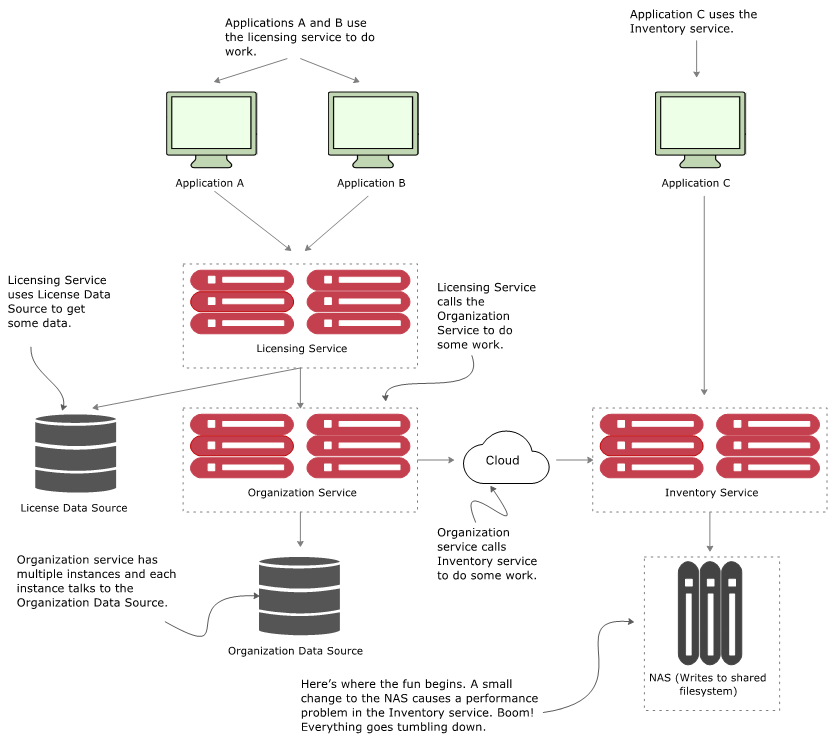
Let’s start this section with a scenario. Imagine you’re one of the developers on the O-stock application, and you’re on-call this week. You get a support ticket from a customer who’s complaining that one of the screens in the application is running slow. You have a suspicion that the licensing service being used by the screen is running slow. But why and where? The licensing service relies on the organization service, and both services make calls to different databases. Which service is the poor performer? Also, you know that these services are continually being modified, so someone might have added a new service call into the mix. Understanding all the services that participate in the user’s transaction and their individual performance times is critical to supporting a distributed architecture such as a microservice architecture.