concept creation in category spring

This is an excerpt from Manning's book Spring Dynamic Modules in Action.
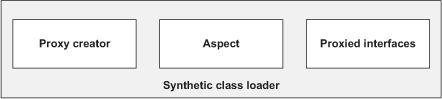
Proxy-based AOP implies the manipulation of bytecode, and OSGi doesn’t make such manipulations particularly easy. The class of a proxy is generated dynamically and defined in a specific classloader, which must have privileged visibility, because it has to see all the classes and interfaces that are blended in the proxy class. Usually, these classes and interfaces have nothing in common; that’s the whole point of AOP—separation of concerns, with the target object not knowing anything about its decorator. The creation of the proxy class is where all the parties meet, and OSGi doesn’t like classloader gatherings!
Spring DM’s extender delegates the creation of Spring application contexts to an OsgiApplicationContextCreator. This interface is simple, but its implementation has a huge responsibility because it defines the creation of application contexts. This is its signature: