concept business process in category system administration

This is an excerpt from Manning's book Self-Sovereign Identity.
They can be cryptographically verified in real-time. To be confident in an authorization decision, a verifier must trust the claims being presented. As explained in chapter 2, the whole point of SSI architecture is so a verifier’s agent can verify the issuer’s signature on the holder’s proof in seconds.

This is an excerpt from Manning's book Open Source SOA.
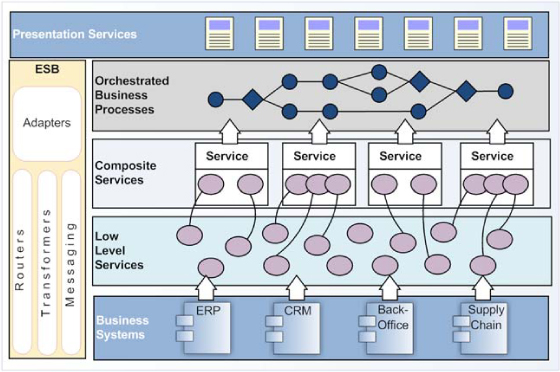
We’ve spent the last two chapters talking about the Service Component Architecture (SCA) and its implementation using Apache Tuscany. You’ve learned how to use this framework to create reusable services that can be exposed through a variety of protocols, such as SOAP-based web services, JMS, and RMI. The ability to create and propagate such component-based services is one of the central principles of SOA. Now, in the next three chapters we’ll address business process management (BPM), which, at its core, is about leveraging these services to create business processes. In other words, we’re transitioning from how to create the services to how they can be consumed and used. As you’ll learn, BPM represents a new paradigm for software application development where services can be woven together into visual models that reflect actual business processes.
There’s reason to believe that BPM won’t suffer the same ignominious fate as other business and technology initiatives such as total quality management and process reengineering. This is because it’s grounded in the notion of the process, which, after all, is what defines a business. What exactly constitutes a business process? Prahalad and Krishnan define it as “the link between the business strategy, business models, and day-to-day operations” [Prahalad]. Or, as Smith and Fingar put it, “Processes are the business” [Fingar]. BPM, unlike reengineering, strives to leverage the information systems already in place. BPM’s aim is multifold, but its main objectives are to
As we pointed out earlier, BPM is suited for modeling, automating, and executing business processes. A business process, by definition, is a sequence of steps (or collection of activities) necessary to perform a business function. Examples abound in any organization, from on-boarding of new employees or customers to order processing, and invoice and purchase order approval. Other processes are specific to a given industry, such as a patient registration process for a hospital, or the setup of clinical trials for a pharmaceutical company. Identifying a candidate process in which to use BPM can be challenging, since the complexity of some processes make them more difficult than others to implement. The biggest benefit can likely be achieved where there is a clearly defined existing, high-volume process that involves integration with one or more systems and perhaps includes human interface tasks. An example is the web-based sales order process shown earlier in figure 5.2 (which admittedly is simplified).