liveBook · Manning

Ability to make changes

As explained in AI Governance

Change capability is an application’s ability to alter real-world data or trigger consequential actions.

Ability to make changes is an application’s capacity to alter real-world data or trigger consequential actions. It extends risk beyond harmful output: an action can corrupt records, send an email to the wrong person, or move money. section 4.2

From output to action

A bad response displayed as text may be embarrassing; a response that triggers a transaction or bans a user can cause real-world harm. section 4.2

Figure 4.2 Security Risk Factors. Each additional factor compounds the risk.
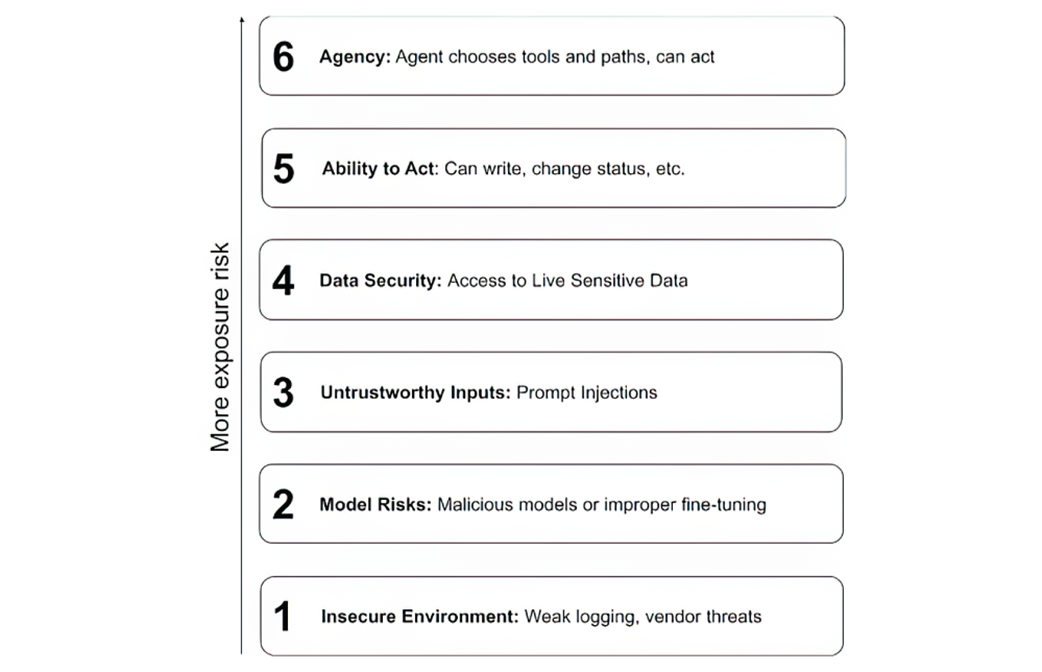
The risk-factor diagram places change capability in a ladder where additional factors compound risk. section 4.2

How AI Governance covers it

How deep it goes
Defines the capability and contrasts output-only harm with consequential actions, without detailing implementation controls.
Examples
Names corrupted records, misdirected emails, invalid transactions, moved money, and marketplace bans as consequential failures.
What you can do after
Evaluate whether an application’s outputs can trigger actions that cause real-world harm.
How it connects
Connects change capability to data access, prompt injection, and agency within a dependency ladder of risk factors.

This explainer was generated by Manning's knowledge graph from the text of AI Governance. The section links point to the parts of the book it draws on.