Acceptance criteria are verifiable conditions an output or implementation must meet to be acceptable. Set them before work begins, then judge the result against the criteria rather than assumptions or memory. section 14.5 section 1.2.3
Make the conditions specific enough that different people would reach the same decision. For example, a refund-test prompt can require:
- One test per business rule, with each test name stating the rule. section 14.5
- No mocks, integration tests, or external dependencies; all tests run in under one second. section 14.5
For implementation work, treat clear acceptance criteria as an entry condition alongside an agreed architectural approach and a validated test environment. This helps prevent false starts caused by differing assumptions. section 1.2.3 section 1.2.4
Figure 14.4 The spec as the stable anchor in an AI-assisted workflow: the AI varies, the acceptance criteria don't.
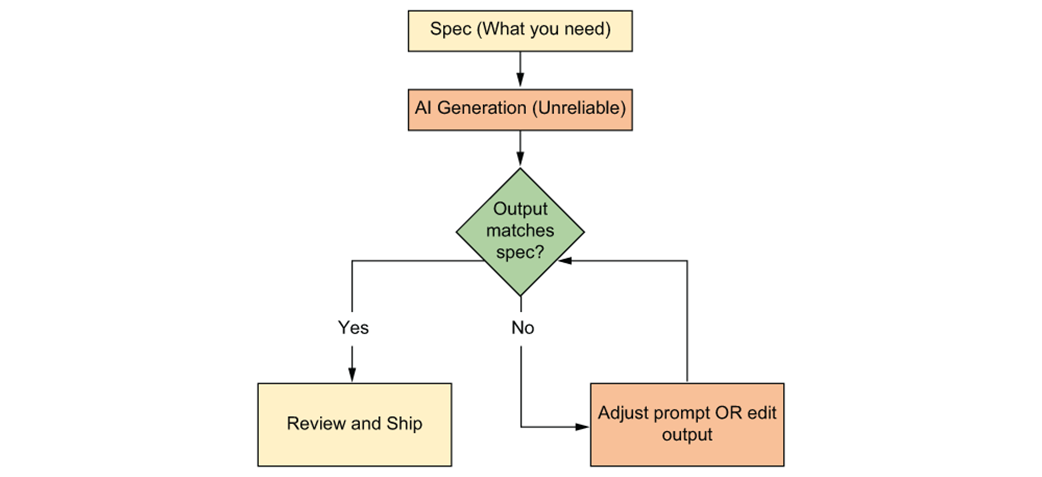
The spec acts as a stable anchor when AI-generated output varies across model upgrades. section 14.5