An accountability metric quantitatively evaluates the responsibilities, performance, or results attributable to an individual or team. It makes daily work, processes, and successes visible while connecting team efforts to organizational goals. section 7.1 section 7.4
Accountability metrics commonly:
- Set expectations and measure progress toward responsibilities, often informing performance reviews, promotions, bonuses, or team development. section 7.1.3
- Track timely, accurate completion of work, such as customer tickets resolved within 24 hours or bugs resolved within a quarter. section 7.1.3
- Break team-level results down by individual contributor to identify target attainment, support needs, coaching opportunities, or work reassignment. section 7.1.3
- Remain specific, measurable, achievable, relevant, and time-bound, with targets grounded in historical data, benchmarks, and initial results. section 7.4
Marketing metric classification
Classify existing marketing measures as performance, operational, or accountability metrics; decide which require team-level measurement; then hypothesize and test how operational measures affect overall performance. section 7.1.4
Figure 7.6 A graph showing the sales representative performance compared to their quotas, based on their seniority at the organization
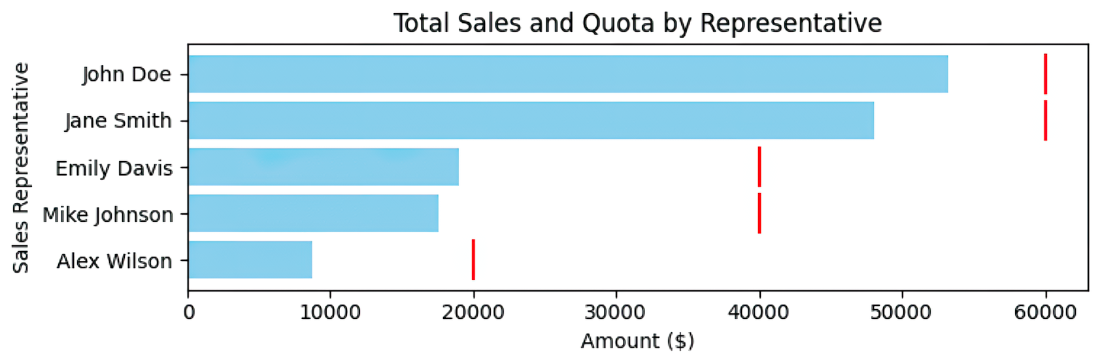
Compare sales representatives’ quota attainment by organizational seniority to see how an accountability metric exposes differences in performance. section 7.1.3
