liveBook · Manning

ACT rule

As explained in Architecting Accessibility

An ACT rule is a technology-specific procedure for testing an individual accessibility success criterion, especially in automated testing or auditing.

An ACT rule turns an individual accessibility success criterion into technology-specific testing steps. It is particularly useful for edge cases and is aimed primarily at automated test-tool vendors and auditors. section 1.5.1

Figure 1.2 This image illustrates the various components in WCAG 2.2. Guidelines are organized under four principles. Each of the 13 guidelines includes normative success criteria: the requirements used to determine conformance at levels A, AA, or AAA. WCAG also provides informative supporting material, including techniques, understanding documents, testing rules, and additional guidance to help explain and apply those requirements.
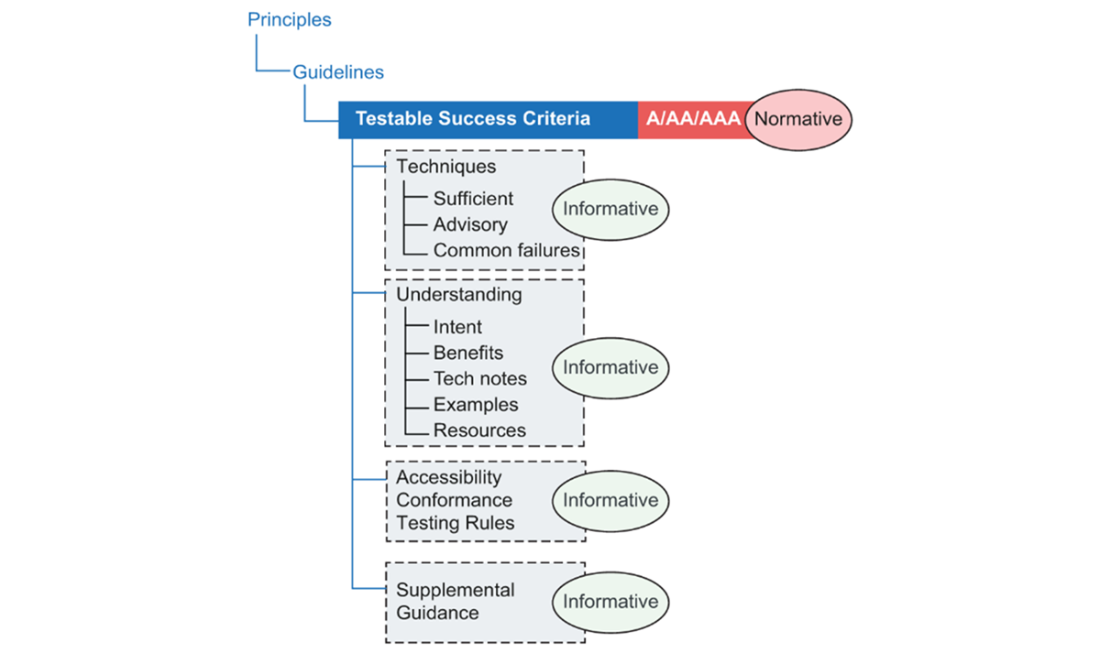
Shows where testing rules fit among WCAG’s success criteria and supporting materials. section 1.5.1
How Architecting Accessibility covers it

How deep it goes
Defines the role and scope of testing rules but gives no individual rule or worked test procedure.
What you can do after
Apply technology-specific steps to test individual success criteria, including edge cases.
How it connects
Ties ACT rules to WCAG success criteria, automated accessibility testing, and audits.

This explainer was generated by Manning's knowledge graph from the text of Architecting Accessibility. The section links point to the parts of the book it draws on.