Affiliative leadership focuses on building strong relationships and creating a harmonious team environment. section 3.2.1
Use it as one option among several leadership styles rather than as a universal answer; effective leadership adapts to the situation. section 3.2.1
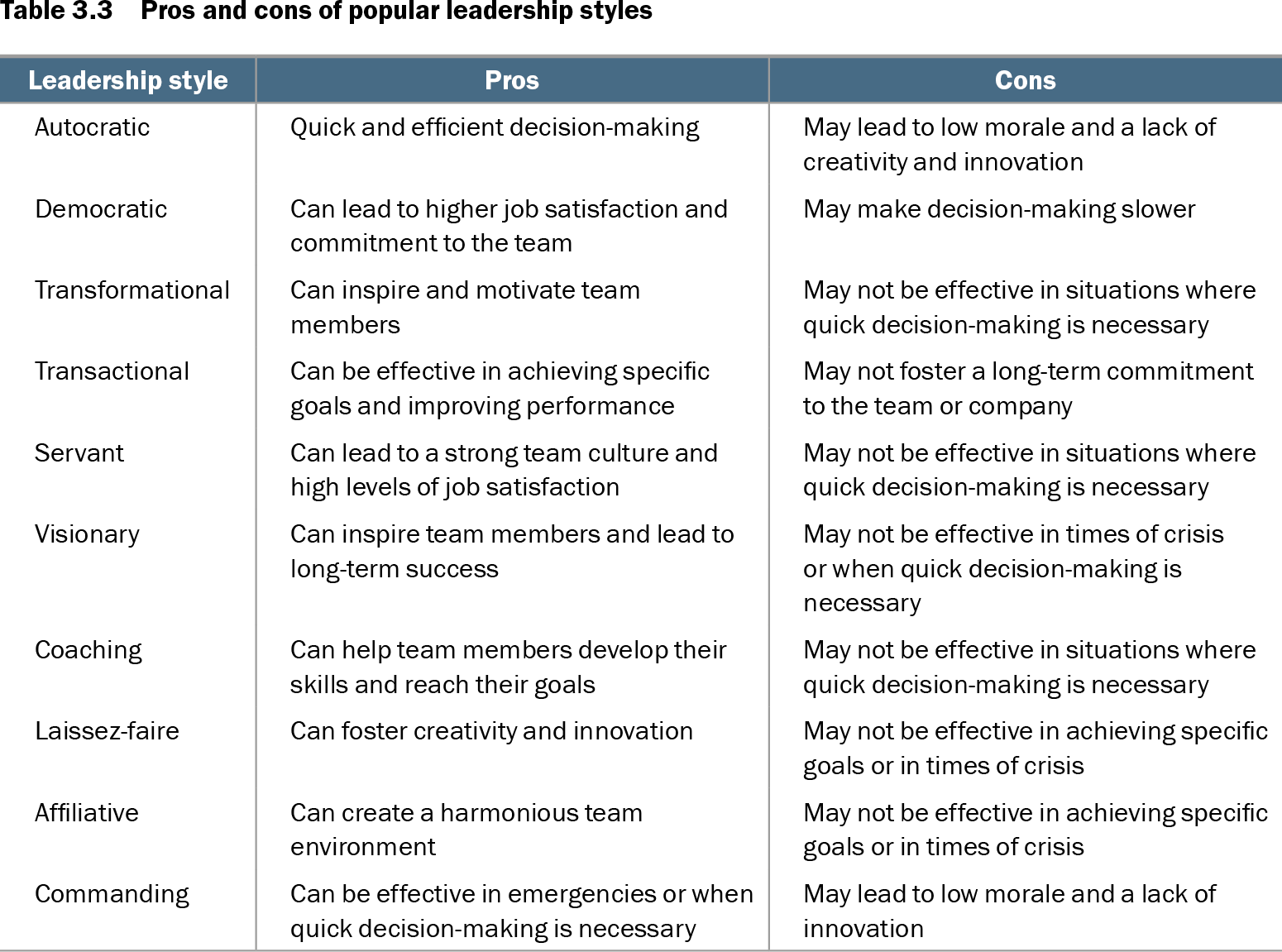
Table 3.3 Pros and cons of popular leadership styles (view table figure)
| Leadership style |
Pros |
Cons |
|---|---|---|
| Autocratic |
Quick and efficient decision-making |
May lead to low morale and a lack of creativity and innovation |
| Democratic |
Can lead to higher job satisfaction and commitment to the team |
May make decision-making slower |
| Transformational |
Can inspire and motivate team members |
May not be effective in situations where quick decision-making is necessary |
| Transactional |
Can be effective in achieving specific goals and improving performance |
May not foster a long-term commitment to the team or company |
| Servant |
Can lead to a strong team culture and high levels of job satisfaction |
May not be effective in situations where quick decision-making is necessary |
| Visionary |
Can inspire team members and lead to long-term success |
May not be effective in times of crisis or when quick decision-making is necessary |
| Coaching |
Can help team members develop their skills and reach their goals |
May not be effective in situations where quick decision-making is necessary |
| Laissez-faire |
Can foster creativity and innovation |
May not be effective in achieving specific goals or in times of crisis |
| Affiliative |
Can create a harmonious team environment |
May not be effective in achieving specific goals or in times of crisis |
| Commanding |
Can be effective in emergencies or when quick decision-making is necessary |
May lead to low morale and a lack of innovation |
Compare affiliative leadership with other styles through a pros-and-cons table before choosing an approach. section 3.2.1