Aggregate orientation groups related data into one atomic unit, called an aggregate. Think of it as grabbing one box containing everything needed for an entity, rather than searching several cabinets. section 8.2.2
A customer in one document
A customer’s profile, addresses, and recent orders can be bundled into one document. The application can retrieve the information in one database operation instead of joining separate tables. section 8.2.2
Figure 8.3 Showing how NoSQL Document databases store data. Instead of splitting a customer and their orders across separate tables linked by Foreign Keys, all related information is nested into a single, self-contained document. When the application asks for Alice's profile, the database returns her orders at the exact same time; no expensive "Joins" required!
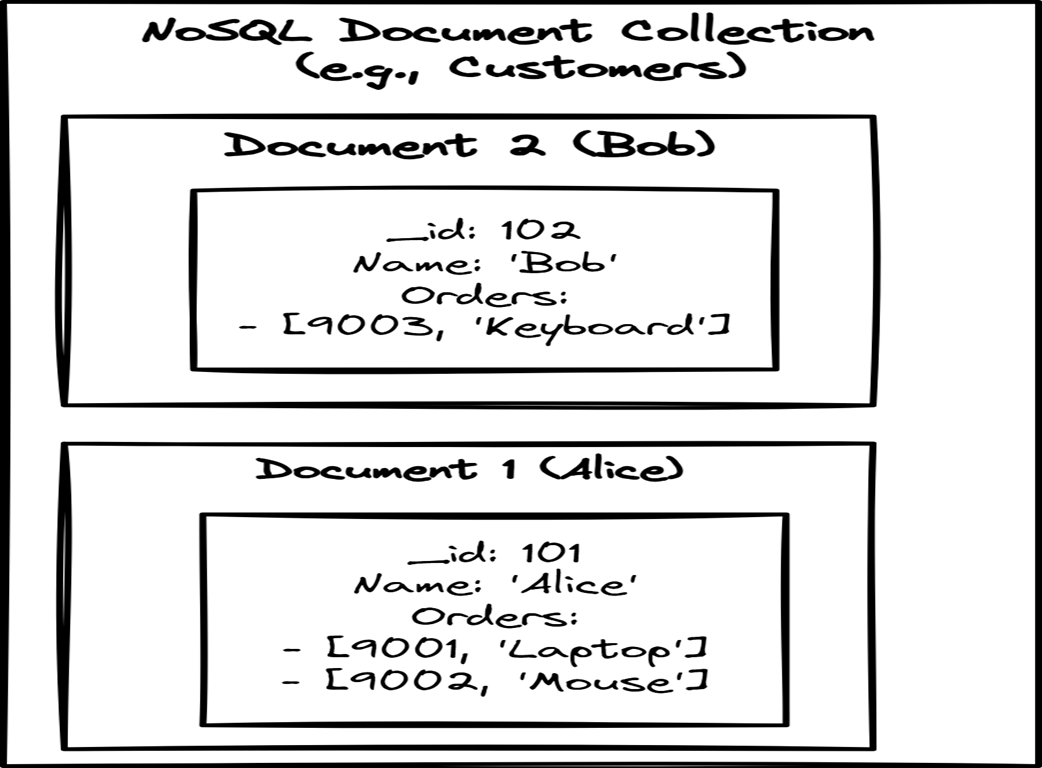
Compare a customer and orders nested in one document with data split across related tables. section 8.2.2
The tradeoff is in how the data is used. Reading a whole aggregate can be fast, especially at scale, but updating a particular piece across many aggregates can mean opening every box. section 8.2.2
