An AI add-on adds artificial-intelligence capability to an established product, extending an existing foundation and user base instead of making AI the product’s primary foundation. This brownfield pattern can deliver a quick win, but legacy data, integration, governance, and infrastructure constraints can determine whether it creates value. section 2.1.4
Treat an AI add-on as a product and organizational change, not merely a model integration:
- Target high-impact opportunities where AI amplifies the company’s existing domain competence and competitive advantage. section 2.1.4
- Plan for scattered databases, incompatible formats, data cleanup, governance work, and possible infrastructure updates. section 2.1.4
- Build confidence through differentiated design, development, resource allocation, risk management, and stakeholder decisions. section 2.1.4
Established analytics products
A financial analytics platform adds AI while retaining its established foundation. Comparable applications include adding sustainability reporting to a corporate reporting tool or integrating AI into a data analytics platform with substantial governance needs. section 2.1.4
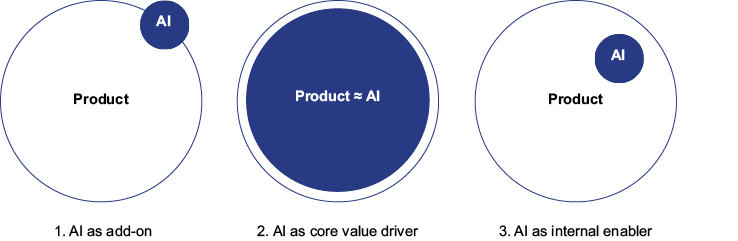
Compare the AI add-on with other integration scenarios before choosing design, delivery, and resource-allocation approaches. section 2.1.4
