AI principles are public commitments that guide how artificial intelligence should be developed, released, secured, and explained. They translate broad concerns about safety and public trust into expectations for organizations, though their force depends on whether they are voluntary or enforceable. section 10.29
Voluntary commitments announced by leading United States technology companies centered on three practical aims:
- Make systems safe before public release through internal and external testing and information-sharing about risk management. section 10.29
- Put security first through cybersecurity safeguards, insider-threat protections, and vulnerability reporting. section 10.29
- Earn public trust through measures such as watermarking and public reports about released systems’ capabilities and limitations. section 10.29
AI principles can establish an early direction for governance, but vague wording and the absence of enforcement may leave organizations wide discretion. They may therefore create useful norms without guaranteeing meaningful change. Broader AI policy combines such commitments with regulation, national strategies, and corporate self-governance. section 10.29 section 10.35
Figure 10.5 The three pillars of voluntary commitments made to the White House by leading AI companies
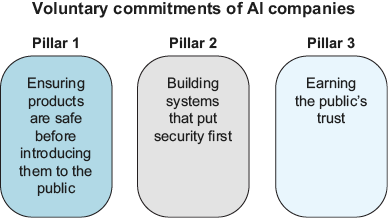
Three-pillar overview of voluntary commitments concerning safety, security, and public trust. section 10.29
