AI-specific governance is the coordinated use of policies, controls, and practices to manage risks across an AI product’s data, intelligence, and user experience. It balances innovation with security, privacy, fairness, transparency, accountability, and regulatory compliance. section 1.3.2 section 11.6
A practical governance program addresses:
- Security: validate training data, encrypt sensitive information, and monitor third-party libraries for poisoning, exfiltration, model theft, and supply-chain vulnerabilities. section 11.6
- Accountability: retain traceable decision records and ensure human oversight can intervene when recommendations are incorrect or dangerous. section 11.6
- Trust: make outputs explainable and interpretable so users can understand decisions and adjust their actions with greater confidence. section 11.6
- Fairness and compliance: test for bias, retrain on diverse datasets, assess regulatory risks, apply privacy by design, and monitor changing requirements. section 11.0 section 11.6
From firefighting to governance by design
Sam initially treats governance reactively while developing AI recommendations for healthcare, finance, retail, and other clients. After repeated incidents, he shifts governance left: practices are embedded from ideation through deployment, making compliance, ethics, reliability, scalability, and trust part of the development cycle rather than a final review. section 11.0 section 11.5
Figure 11.9 A roadmap for proactive governance implementation (shift-left approach)
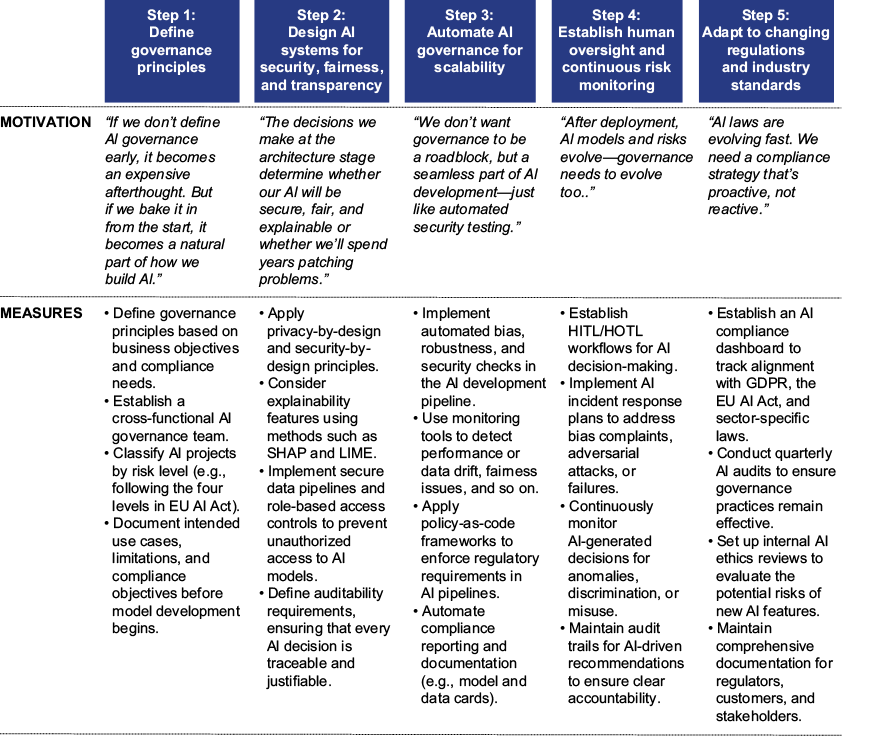
Use the roadmap to connect governance practices and their motivations to each phase of the AI lifecycle. section 11.5


