A user who has had a bad experience with AI may distrust a new AI product before trying it. That resistance is algorithmic aversion. It can prevent adoption even when the product could help with the task. section 10.1.2 section 10.2.2
Investigate the resistance rather than treating it as a model-performance problem alone:
- Ask how users react to errors: are they showstoppers or part of reaching a useful result? section 10.1.2
- Check for concerns such as job replacement, and learn how much control users want and can handle. section 10.1.2
- Design for calibrated trust: users should see enough value to use the product while remaining alert to mistakes. section 10.2.2
Make a limitation specific
Instead of relying only on a general warning that AI can make mistakes, an interface might state that its AI creates reports for European markets but has not been trained for other regions. The boundary gives users something concrete to assess. section 10.2.2
Figure 10.19 On the trust continuum, aim for calibrated trust.
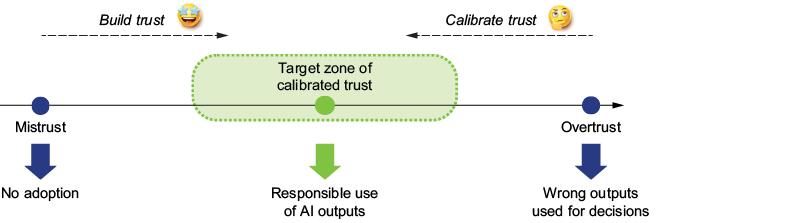
The trust continuum places algorithmic aversion opposite overreliance and identifies calibrated trust as the design goal. section 10.2.2
