Alignment regression measures how often previously achieved alignment is lost as an implementation evolves and new features are added, harming behavior that used to work. section 3.4.2
Unlike time-to-aligned implementation, which measures how quickly a change first meets its intent, constraints, and verification evidence, alignment regression tracks whether alignment holds as the system grows. section 3.4.2
Figure 3.4 The SDD governance operating loop involves observing gaps between intent and implementation and correcting them by revising the specification and regenerating the implementation. We then attribute the gap in the specification to where the intent was lost in the SDD workflow to improve it, and we confirm the improvement is working when the same class of gap stops recurring.
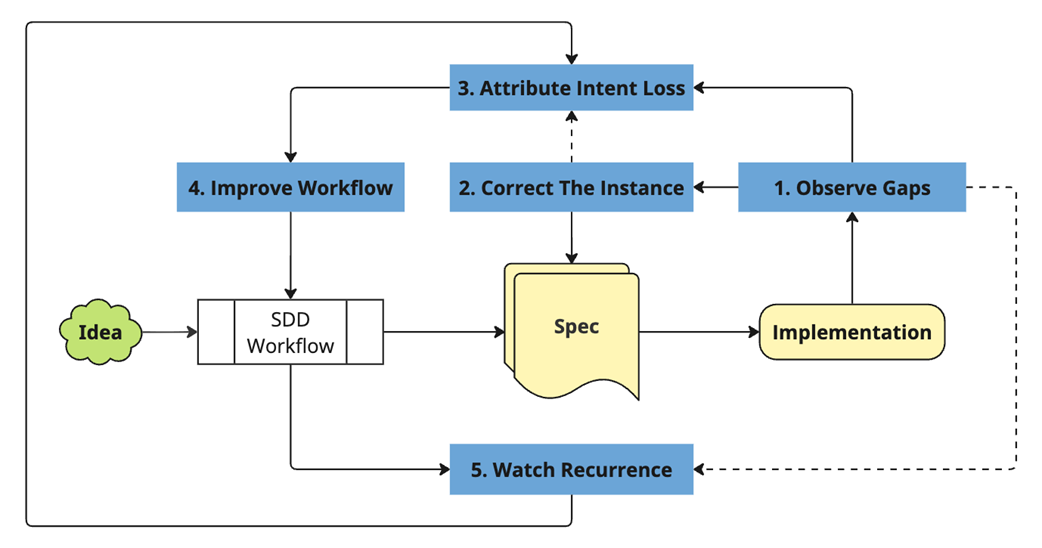
The governance loop uses gaps between intent and implementation to guide specification revisions and regenerated implementations, then checks whether the same gap recurs. section 3.4.2