Analytics engineering develops and maintains transformed data models and analytical infrastructure. It sits between data engineering and analytics, turning complex organizational data into curated models that support analysis at scale. section 11.4.1
The work begins with stakeholder questions, recurring analytical tasks, and the routines of analysts. Analytics engineers preprocess, clean, combine, aggregate, or denormalize data so analysts spend less time wrangling and more time interpreting results. section 11.4.1 section 11.4
A practical analytics engineering workflow includes:
- Identify frequently asked stakeholder questions, repeated work, and the information most useful for analysis. section 11.4.1
- Create cohesive analytics schemas organized around how the organization operates, using combined, aggregated, or denormalized tables. section 11.4
- Structure business events in fact tables and describe related entities through dimension tables. section 11.5
- Monitor and test models for duplicates, missing values, inaccuracies, and other discrepancies. section 11.5
A curated model for analysis
An analytics engineer might synthesize multiple sources into a table that supports recurring organizational questions, reducing the time, effort, and inaccuracies involved in repeated queries. A star schema could place transactions, clicks, or page views in a fact table and connect them to customer, user, or employee dimensions. section 11.5 section 11.4
Curated models improve access to data but do not guarantee valid analysis. Analysts still need to examine granularity, collection processes, missingness, and whether measures represent the intended concept. Automated checks can address common quality problems, while inconsistent tracking or subjective definitions may require cautious use or exclusion. section 6.2.3 section 11.5
Figure 11.19 Analytics engineering takes the complex queries necessary to handle the nuances of an organization’s data and codes them into curated models for analysis.
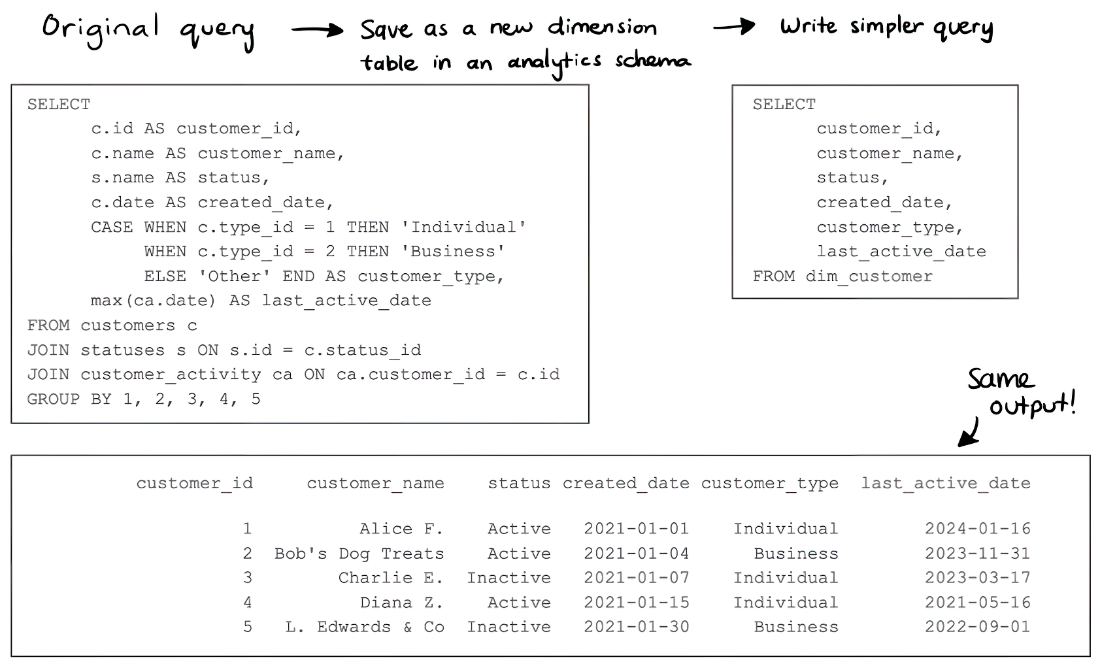
Shows how complex organization-specific queries become curated models for analysis. section 11.4.1
