liveBook · Manning

ANARCI

As explained in Domain-Specific Small Language Models

An antibody-numbering and receptor-classification tool used here to validate whether generated antibody sequences are biologically plausible.

ANARCI validates generated antibody sequences using antibody numbering and receptor classification. It checks conformity with known patterns and structures, providing a more biologically meaningful assessment than perplexity alone. section 8.3 section 8.5

Use ANARCI to:

  • Submit a generated antibody sequence to the online tool and inspect its numbering and classification results. section 8.3
  • Run validation programmatically through the Python ANARCI API. section 8.3
  • Combine automated checks with subject-matter-expert review of biological relevance and potential functionality. section 8.3 section 8.5
Figure 8.2 The output of the online ANARCI tool for one of the antibody sequences generated in our example
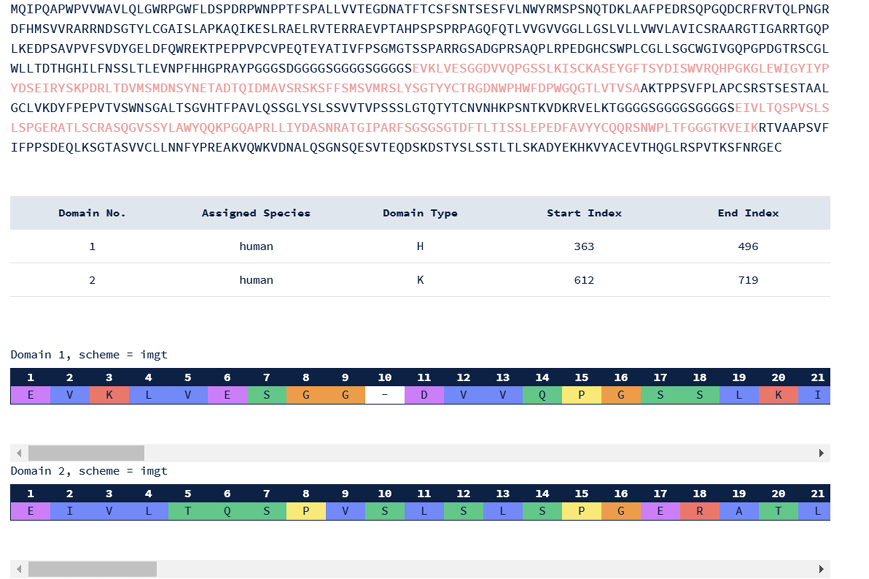
Shows the online ANARCI output for one generated antibody sequence. section 8.3

How Domain-Specific Small Language Models covers it

How deep it goes
Defines numbering and classification, explains structural-pattern checks, and stops short of proving functionality without expert review.
Examples
Uses an online report for one generated antibody sequence and supports equivalent validation through a Python API.
What it assumes
Assumes generated antibody sequences and teaches domain-specific validation beyond generic language-model metrics.
What you can do after
Evaluate generated antibody sequences against known numbering, classification, and structural patterns.
How it connects
Connects antibody generation with antibody numbering, receptor classification, perplexity, and domain-specific validation.

This explainer was generated by Manning's knowledge graph from the text of Domain-Specific Small Language Models. The section links point to the parts of the book it draws on.