An anonymous visitor interacts with a website or brand without providing identifying information, such as a name or email address. For acquisition marketing, this creates a familiar challenge: businesses want to engage visitors, but may know little about their preferences, needs, or potential value. section 6.2
Cookies can preserve activity during a web session, such as items in a shopping cart. If a visitor later signs in, that earlier activity can be connected to the account. First-party cookies are handled by the site being visited; third-party cookies are handled by another site, and their use for tracking is increasingly controversial. section 6.2
From browsing to a known account
An airline can connect a flight selected before sign-in with the traveler’s account details, helping continue the purchase without losing that earlier activity. section 6.2
Reaching a visitor after they leave
A shoe shopper may provide an email address to enroll in a marketing program. The retailer can use it to follow up, but matching that address to the shopper’s social-media account may fail if the accounts use different emails. A third-party provider may append other emails, an address, or device identifiers to improve audience matching across channels. section 6.3.3
Figure 6.10 Data enrichment for enhanced match rates
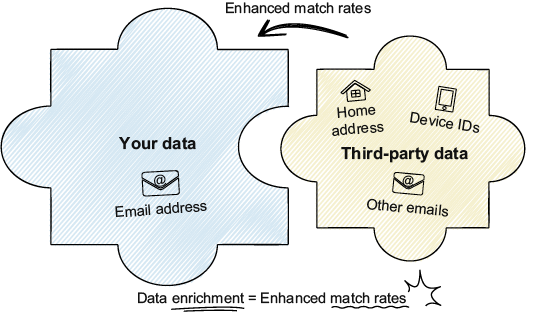
Shows how data enrichment can add contact information to improve match rates across advertising platforms. section 6.3.3
