API discovery identifies APIs and attack-surface elements that are deployed or exposed but unknown to the organization. It helps reveal what API sprawl has made difficult to track, including undocumented, deprecated, or third-party-exposed interfaces. section 3.5 section 3.7
A basic discovery practice is maintaining an API catalog with versions and descriptions. APIs.json provides an open indexing specification, while /.well-known/api-catalog has been proposed as a standard catalog location. Observability inspects accepted requests; code analysis searches implementations, but both approaches can miss endpoints. section 3.5
Discovery should account for several sources of exposure:
- Shadow APIs are undocumented interfaces released with few or no checks. section 3.7
- Zombie APIs are deprecated versions that were never retired. section 3.7
- Ghost APIs are exposed by third-party libraries or systems. section 3.7
Figure 3.22 API sprawl raises the risk of shadow, zombie, and ghost APIs. These APIs tend to be less protected, and when hackers discover them, data breaches can result.
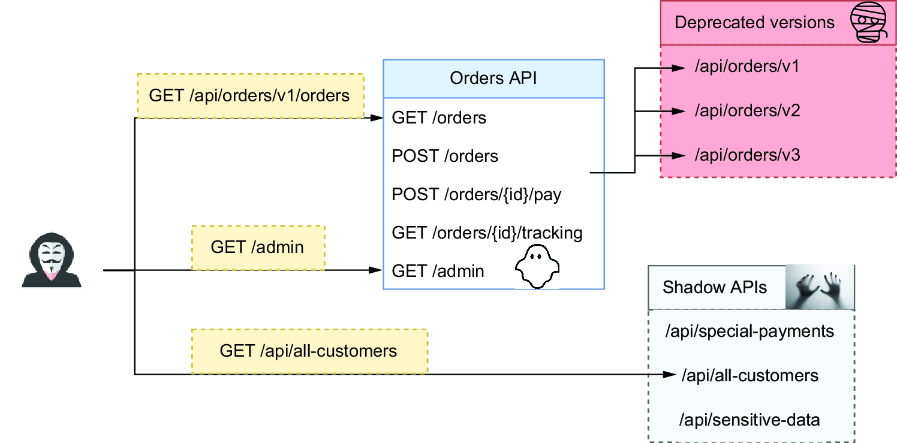
API sprawl increases the risk that shadow, zombie, and ghost APIs remain less protected and expose data when attackers discover them. section 3.5
