An API lifecycle tracks an API from identifying a need through design, development, testing, deployment, and consumption. It separates API design from deciding to create an API and from coding its implementation. section 1.3.3
Figure 1.7 API design is an iterative activity distinct from deciding to create an API and implementing it.
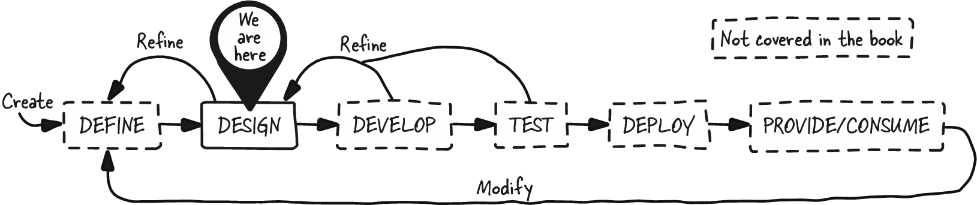
Use the lifecycle figure to see why API work is iterative rather than a strict sequence: activities can overlap, repeat, and send discoveries back to earlier decisions. section 1.3.3
A typical lifecycle includes these activities:
- Define the need, such as monetizing platform content or supporting friend identification in images and videos. section 1.3.3
- Design capabilities and interfaces, describe them, and enrich the resulting artifacts. section 1.6
- Develop, test, deploy, and provide the API for consumption, often using a gateway, catalog, or developer portal. section 1.3.3
Design reference kit
An API Capabilities Canvas, OpenAPI document, design guidelines, linting rules, simulated API, or functional tests can guide implementation, testing, deployment, and consumer use. section 19.0

