liveBook · Manning

Append mode

As explained in Architecting an Apache Iceberg Lakehouse

Append mode is a write configuration that adds new records to existing table data without replacing prior records.

Append mode adds new records to an Iceberg table without modifying or removing existing data files. Each write creates a new snapshot containing the previous files plus the newly written files. section 6.3.1

Use append mode when:

  • Streaming, micro-batch, or other continuously arriving data should accumulate in the table. section 6.3.1
  • Multiple writers need efficient concurrent ingestion, provided each batch lands in separate files. section 6.3.1
  • Atomic commits, time travel, and concurrent write isolation must remain available through snapshot-based table updates. section 6.3
Figure 6.7 After an append, the new snapshot includes all the previous data files and the new data files.
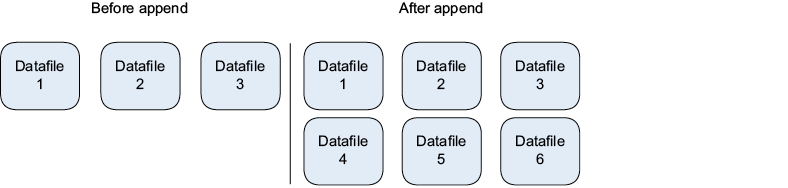
Visualizes how an append preserves all previous data files while adding new files to the next snapshot. section 6.3.1

How Architecting an Apache Iceberg Lakehouse covers it

How deep it goes
Explains snapshot creation, file preservation, efficiency, and concurrent-writer constraints, but stops short of engine-specific configuration.
Examples
Uses continuously arriving streaming or micro-batch records written as new files alongside existing table files.
What it assumes
Assumes familiarity with ingestion workflows and Iceberg tables while distinguishing append from overwrite, upsert, and delete operations.
What you can do after
Apply it via Apache Iceberg to implement efficient append-only ingestion with snapshot-based consistency.
How it connects
Connects append mode to Iceberg snapshots, atomic commits, time travel, concurrent write isolation, and streaming ingestion.

Related concepts

This explainer was generated by Manning's knowledge graph from the text of Architecting an Apache Iceberg Lakehouse. The section links point to the parts of the book it draws on.