The approval queue paradox occurs when faster code generation slows delivery because review and approval become the limiting process. AI turns a familiar nuisance into a critical bottleneck: reviewers face more changes, less context, and greater pressure to approve quickly. section 10.5 section 10.9
A three-line financial bug
An agent-generated checkout change altered currency rounding. The three-line diff looked harmless, but floating-point precision failed on transactions above $10,000. It passed approval in a batch of eleven pull requests while the queue was at 97; the reviewer lacked time and recent context to assess the financial implications. section 10.5
Treat the paradox as a review-design problem rather than a hiring problem:
- Automate formatting, correctness checks, and policy-based triage before human approval. section 10.5 section 10.9
- Make changes arrive with clean code, a green CI build, and a structured explanation of what changed and why. section 10.5
- Reserve human judgment for architecture, intent, system direction, and whether the change should exist. section 10.5 section 10.9
- Use lint-as-architecture and policy-based triage to increase review capacity without demanding faster or more numerous reviewers. section 10.9
Figure 10.5 Approval Queue Paradox.
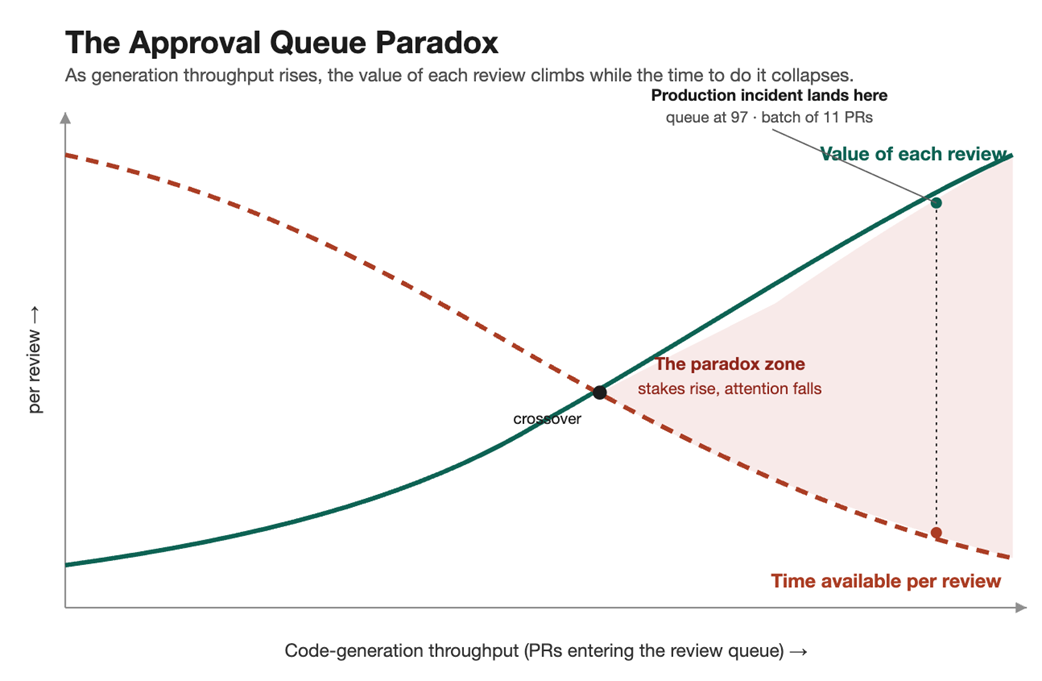
Use the figure to visualize how increasing generation speed shifts pressure onto the approval queue. section 10.5
