An architectural decision chooses among structures, behaviors, or constraints while shaping domains, code organization, team boundaries, and the outcomes a product can pursue. section 10.4
Good decisions are socio-technical: teams must clarify what the product should optimize for before selecting a model that organizes architecture and ownership. section 10.4
Use a progressive decision process:
- Surface competing models and the product beliefs behind them. section 10.4
- Explore the domain beyond a superficial high-level map; inspect complexity and possible boundaries through focused workshops. section 6.2.2 section 9.2.6
- Choose techniques that fit the question, such as EventStorming, context mapping, Core Domain Charts, or Wardley Maps. section 10.4 section 6.2.2
Vinted’s category strategy
At Vinted, two category models attracted support from different groups because each reflected a different product strategy. EventStorming and context mapping exposed the disagreement; Core Domain Charts and Wardley Maps helped the team compare complexity, differentiation, and long-term outcomes before converging. section 10.4
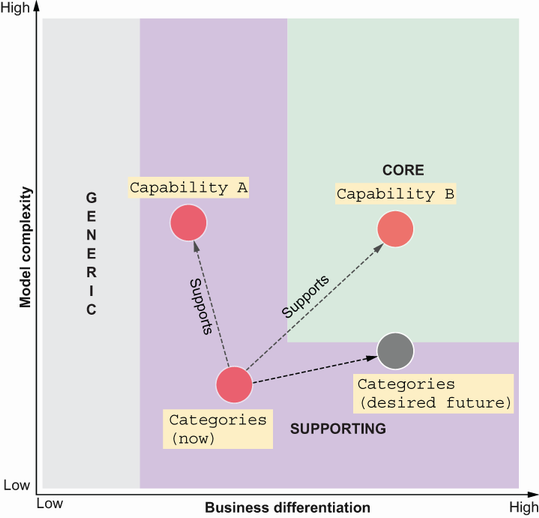
Use the strategic portfolio map to inspect how architectural options relate to complexity, differentiation, and other investments. section 10.4

