An architectural style is a recurring blueprint for structuring components, defining their interactions, and enforcing constraints. In agentic systems, it connects agents with data, runtime policies, existing platforms, and supervision. section 1.7
A useful architectural style makes three design boundaries explicit:
- Interaction boundary: specifies how agents interact with data and platforms. section 1.7
- Authority boundary: evaluates actions against policy-as-code before execution. section 1.7
- Failure boundary: defines whether unavailable policy evaluation fails closed or routes the action to human review. section 1.7
Policy Gateway
The Policy Gateway pattern places a policy-as-code decision before every agent action. It consistently enforces authority and constraints, while specifying a controlled response when the policy engine is unavailable. section 1.7
Figure 1.7 The Agentic Enterprise Framework organizes the architect’s work into three actionable streams: patterns, playbooks, and practice, moving from theoretical design to a governed, operational Foundation for Autonomy.
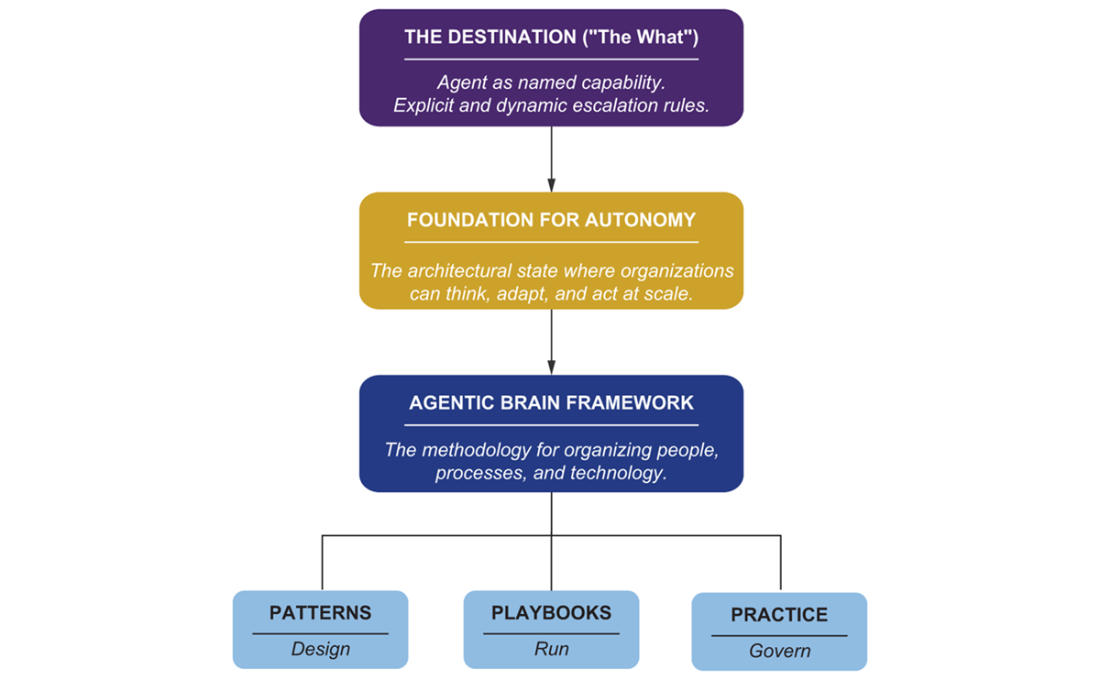
Use the framework view to distinguish architectural patterns from implementation playbooks and governance practice. section 1.7


