Architecturally significant requirements are requirements that substantially influence a system’s architecture. They identify concerns architecture must satisfy, unlike many user-facing features that can be implemented under a range of architectures. section 3.1.3
Three perspectives describe what architecture must address:
- Non-functional requirements specify how well the system performs its functions and how easily it can be developed and maintained. section 3.1.3
- Architecturally significant requirements focus on requirements that shape architectural choices; quality attributes offer another way to frame architecture’s purpose. section 3.1.3
Runtime requirement
An FTGO example specifies handling 233 order-creation requests per second with an average response time of 356 milliseconds. section 3.1.3
Figure 3.2 Three different perspectives on the purpose of an architecture’s architecture, which is multidimensional: traditional non-functional requirements, modern architecturally significant requirements, and quality attributes
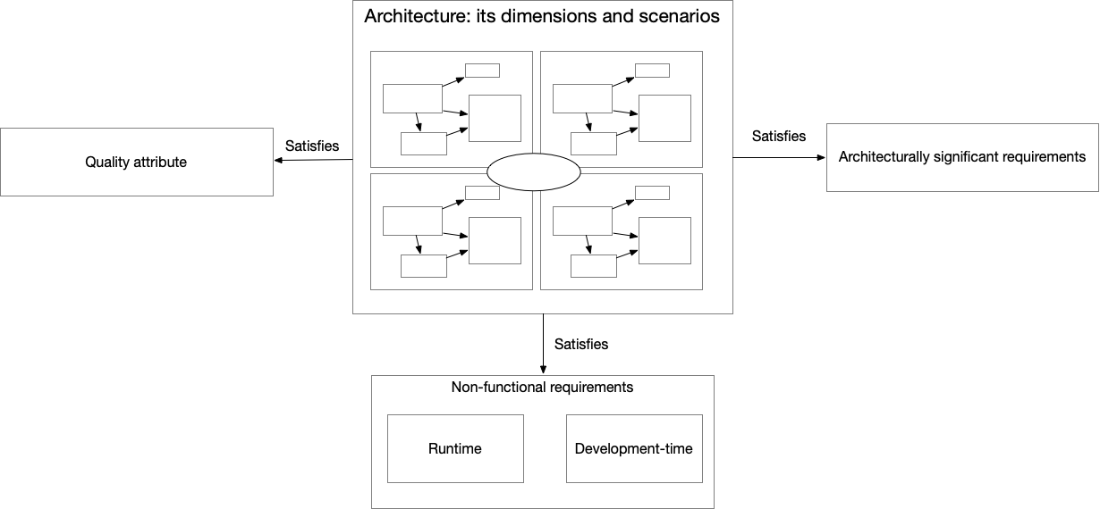
Compare the three perspectives on the purpose of architecture: non-functional requirements, architecturally significant requirements, and quality attributes. section 3.1.3