liveBook · Manning

Artifact packaging

As explained in Machine Learning System Design

Artifact packaging is the process of bundling a trained model and its supporting files into a deployable format.

Artifact packaging bundles a trained model and its supporting files into a deployable format. In a typical training pipeline, it follows data fetching, preprocessing, model training, evaluation and testing, postprocessing, and report generation. section 10.1.1

Use artifact packaging as the final checkpoint in a training-pipeline checklist:

  • Complete model evaluation and testing before packaging the trained model. section 10.1.1
  • Keep the training pipeline distinct from the lower-level inference pipeline, while recognizing that training can contain inference steps. section 10.1.1
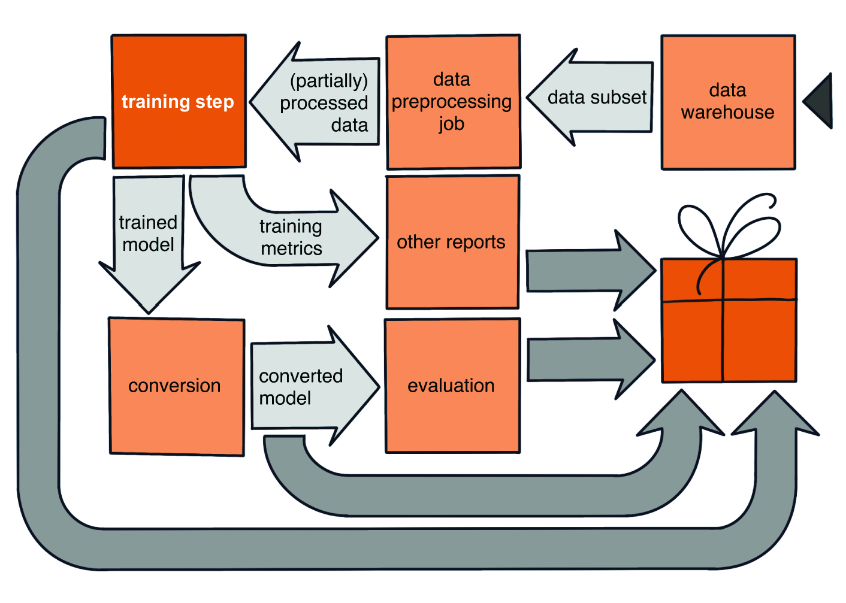
Figure 10.1 A DAG scheme representing a training pipeline
figure

Use the training-pipeline DAG to locate artifact packaging among the pipeline’s stages. section 10.1.1

How Machine Learning System Design covers it

How deep it goes
Identifies artifact packaging as a pipeline step but does not detail its files, format, or implementation.
Examples
Uses a typical training pipeline’s final artifact-packaging step as its concrete example.
What it assumes
Requires distinguishing training pipelines from lower-level inference pipelines.
What you can do after
Apply it by placing artifact packaging after report generation in a training-pipeline checklist.
How it connects
Connects artifact packaging with training pipelines, preprocessing, model training, model evaluation, postprocessing, and report generation.

Related concepts

This explainer was generated by Manning's knowledge graph from the text of Machine Learning System Design. The section links point to the parts of the book it draws on.