An assembly line moves work through sequential stations so each station performs a defined part of production. In software, the equivalent is a continuous integration pipeline: code flows through automated build, quality, packaging, and deployment steps instead of relying on one developer to do everything manually. section 2.3
The goal is not automation for its own sake. Teams need predictable, reliable delivery and fast feedback so they can improve a product before investing heavily in the wrong direction. A repeatable process makes that feedback easier to obtain. section 1.1
A small software assembly line
A GitHub Actions workflow can run when code reaches the main branch, set up Go 1.18, check out the repository, build the application, copy the executable into an artifacts directory, and archive it. Each job and step advances the code to the next station.
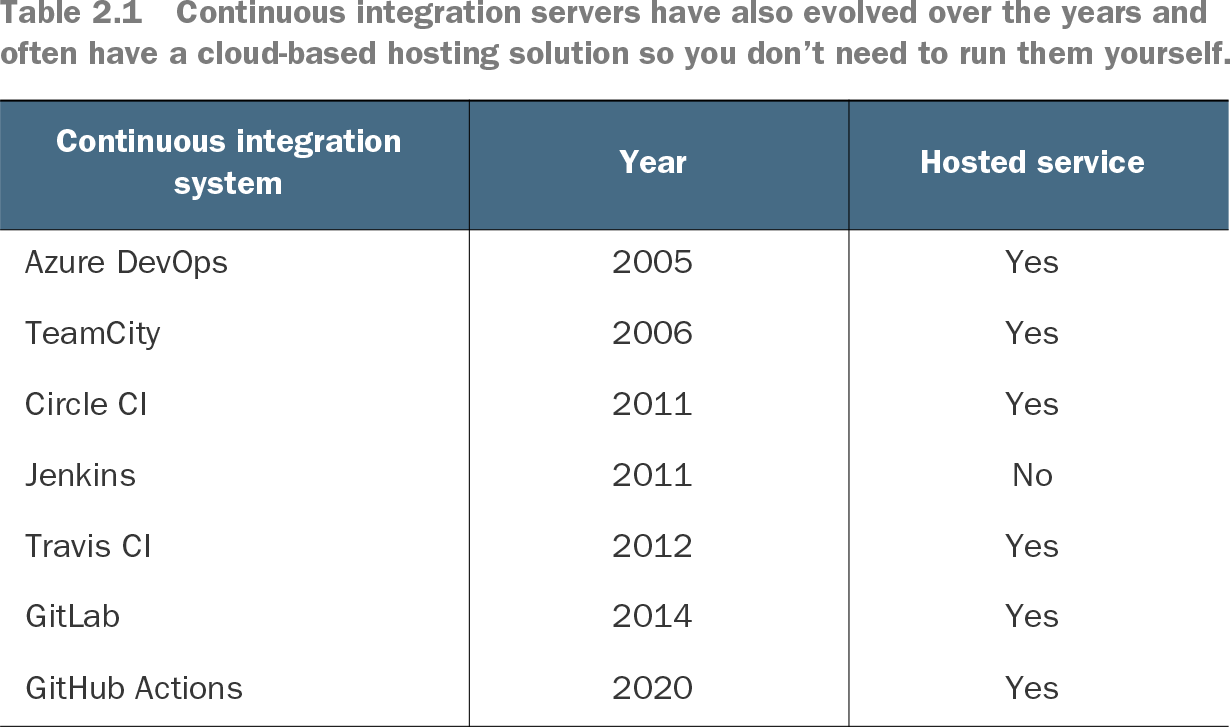
Table 2.1 Continuous integration servers have also evolved over the years and often have a cloud-based hosting solution so you don’t need to run them yourself. (view table figure)
Compare continuous integration systems and their hosted-service options, from earlier servers to GitHub Actions. section 2.3