liveBook · Manning

Assisted intelligence

As explained in The Art of AI Product Development

Assisted intelligence is an AI application mode in which AI supports and enhances human decision making without making decisions independently.

Assisted intelligence is an AI application mode in which AI supports and enhances human decision making without making decisions independently. Human judgment, expertise, and stakeholder input remain central to the result. section 3.3.2

Prioritizing product features

An AI system can provide creative stimulation and market context when a team considers which service or product features to build next. The team and other stakeholders still weigh the options and decide. section 3.3.2

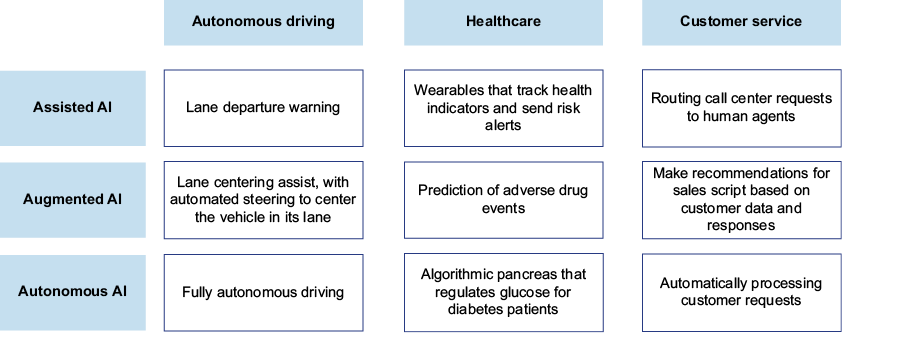
Figure 3.10 AI applications with different degrees of automation
A close-up of a screen

AI-generated content may be incorrect.

Compare assisted intelligence with augmented and autonomous intelligence across application examples. section 3.3.2

How The Art of AI Product Development covers it

How deep it goes
Defines assisted intelligence and contrasts it with two higher-automation modes, without detailing implementation mechanics.
Examples
Uses product-feature prioritization, market context, creative stimulation, and cross-functional stakeholder discussion as examples.
What it assumes
Assumes human judgment and expertise remain available to weigh AI input and determine the result.
What you can do after
Evaluate AI applications by whether they support human decisions or make decisions independently.
How it connects
Connects human decision making with augmented intelligence, autonomous intelligence, and user experience.

Related concepts

This explainer was generated by Manning's knowledge graph from the text of The Art of AI Product Development. The section links point to the parts of the book it draws on.