Attachment theory explains why people form emotional bonds with figures who provide safety, comfort, and care. It is increasingly used to examine relationships between people and social chatbots. section 9.4
John Bowlby developed the theory to explain child–parent relationships. Its evolutionary account proposes that infants are biologically prepared to attach to caregivers because protection and reliable care support survival. section 9.4
The attachment behavioral system is described in simple, intuitive terms:
- A child detects possible threats and seeks an attachment figure. section 9.4
- Reliable care and support increase confidence, security, and happiness. section 9.4
- Attachment figures can shift across life from parents and caregivers to peers and romantic partners. section 9.4
Attachment and social chatbots
During the COVID-19 pandemic, some users formed close bonds with chatbots and displayed classic attachment behaviors. They treated the chatbot as emotional support: someone to confide in and depend on, rather than merely as a tool. section 9.4 section 9.8
Figure 9.2 A simplified version of the attachment behavioral system [35]
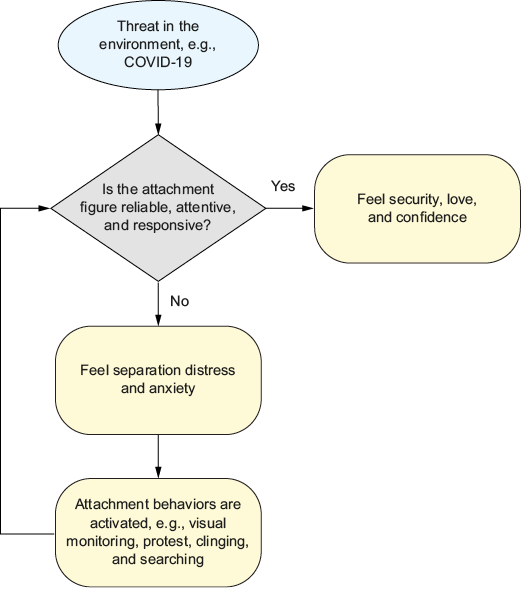
Use the simplified behavioral-system figure to trace how perceived threats, caregiver reliability, and feelings of security relate. section 9.4
Applying attachment theory to human–chatbot relationships can clarify why social chatbots become sources of intimacy and support. It also raises concerns that heavy use could displace real relationships, making responsible design and mental-health safeguards important. section 9.8
