liveBook · Manning

Attention matrix

As explained in Machine Learning System Design

An attention matrix is a two-dimensional array of attention weights relating positions in one sequence to positions in another sequence.

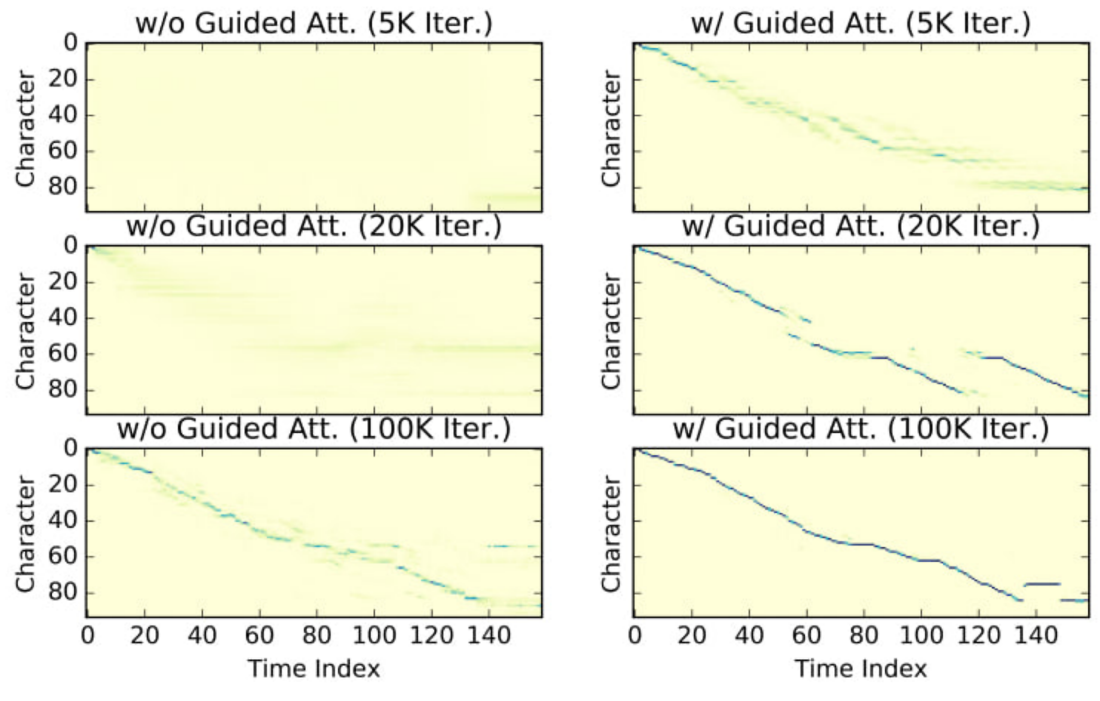
An attention matrix is a two-dimensional map of weights between positions in two sequences. In text-to-speech, it relates audio frames to characters; a nearly diagonal pattern supports the assumption that text and audio progress together. section 9.2.2

Use the matrix as a practical diagnostic:

  • Plot attention regularly during training and compare its shape with the expected alignment. section 9.2.2
  • Apply guided attention loss when large deviations from the diagonal conflict with a known alignment assumption. section 9.2.2
  • Treat moderate deviations as plausible timing variation, but investigate large residuals as signs of difficult sounds or character combinations. section 9.2.2

Diagnosing text-to-speech alignment

Stacy monitors attention plots during training. A near-diagonal matrix indicates that audio frames and characters align as expected; conspicuous residuals identify sounds or character combinations that may require targeted data collection. section 9.2.2

Figure 9.12 Attention plot evolution through training without (left) and with (right) guided attention loss
figure

Compare attention-plot evolution with and without guided attention loss. section 9.2.2

How Machine Learning System Design covers it

How deep it goes
Explains diagonal structure, residual interpretation, and guided-attention loss, but defers attention-module construction details.
Examples
Uses audio-frame-to-character plots, diagonal alignment, training evolution, and residuals around difficult sounds or character combinations.
What it assumes
Assumes familiarity with sequence-to-sequence modeling and attention modules while explaining alignment assumptions from the diagnostic context.
What you can do after
Diagnose alignment problems with attention plots and use residual patterns to inform targeted data collection.
How it connects
Connects attention matrices with sequence-to-sequence tasks, machine translation, guided attention, auxiliary loss, residuals, and text-to-speech.

Also explained in

Compare how 3 books explain attention matrix →

Related concepts

This explainer was generated by Manning's knowledge graph from the text of Machine Learning System Design. The section links point to the parts of the book it draws on.

