liveBook · Manning

Audience design capability

As explained in First-Party Data Activation

A capability that lets marketers explore and define audiences by selecting attributes and inclusion or exclusion criteria from available data.

Audience design capability lets marketers use first-party data to explore and define audiences by selecting inclusion and exclusion criteria. Immediate audience-size feedback supports iteration without making the data team a campaign bottleneck. section 3.1.1

Effective capabilities provide:

  • Understandable first-party data field labels. section 3.1.1
  • Simple inclusion and exclusion criteria. section 3.1.1
  • Immediate audience-size feedback, with advanced breakdowns, overlap analysis, and aggregate audience metrics. section 3.1.1

A practical starting point

An audience-specific dashboard in Tableau, Looker, or PowerBI can expose common selection criteria while analytics teams and marketers build confidence in the data. This short-term approach becomes harder to scale as attributes increase. section 3.1.1

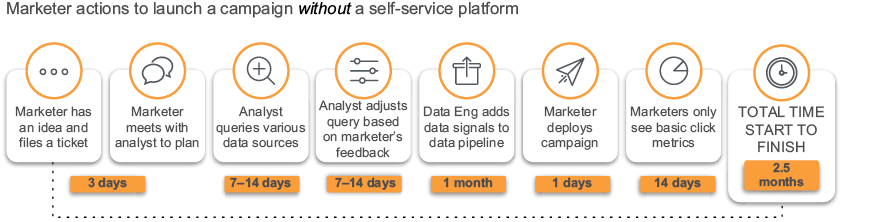
Figure 3.1 A typical manual process for audience creation
A screenshot of a computer

AI-generated content may be incorrect.

The process view makes the manual audience-creation bottleneck visible and clarifies why self-serve capability matters. section 3.1.1

How First-Party Data Activation covers it

How deep it goes
Defines selection, feedback, and advanced analysis, but stops short of detailed platform implementation.
Examples
Uses audience-specific dashboards in Tableau, Looker, or PowerBI and illustrates manual creation through process diagrams.
What it assumes
Assumes accessible first-party data and teaches marketers to work with understandable fields and selection criteria.
What you can do after
Operate/configure a dashboard to apply audience criteria, inspect audience size, and iteratively refine selections.
How it connects
Connects first-party data with audience activation, data visualization, and campaign execution.

Related concepts

This explainer was generated by Manning's knowledge graph from the text of First-Party Data Activation. The section links point to the parts of the book it draws on.