G-Generation is the final graph-based RAG step: one language-model call receives the original query together with retrieval context assembled from connected evidence. Its reliability depends less on generation mechanics than on whether retrieval selected the right context. section 12.1.1 section 12.4.2
Dual-path routing makes the generation input explicit:
- The low-level path contributes entity profiles gathered through graph traversal over specific entities. section 12.4.2
- The high-level path contributes chunk-level matches retrieved through vector search over abstract themes. section 12.4.2
- The system concatenates both results, prefixes them with the original query, and sends the merged context to the language model. section 12.4.2
- A critic can reject the merged context and return the query to the router before generation, reducing the risk of a mistaken routing decision. section 12.4.2
Generation after dual-path retrieval
For a query requiring both specific entities and broader themes, the final input contains the relevant entity profiles and chunk-level matches together. The model then composes the answer directly rather than separately summarizing retrieval results. section 12.4.2
Figure 12.5 LightRAG's dual-path router.
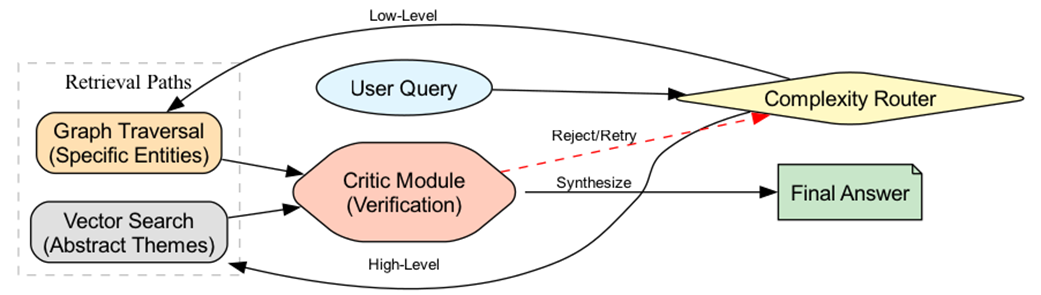
Trace how the router selects low-level and high-level paths, how the critic can trigger a retry, and how both paths converge before generation. section 12.4.2
