When reviewers are rushed, tired, or facing a huge code change, architectural leaks can slip through. An automated guardrail moves governance into the delivery pipeline, where a machine-enforced check can stop a change before it proceeds. For example, it can catch an infrastructure query creeping into a presentation controller. section 13.4 section 13.4
When a deadline makes people want to skip the gates:
- Translate technical risk into business consequences such as outage costs, customer churn, and recovery time. section 13.9.4
- Make the tradeoff explicit: skipping validation may increase change failures and lengthen recovery time. section 13.9.4
- If leadership chooses to bypass verification, record the decision and accepted risk in an Architecture Decision Record (ADR). section 13.9.4
Figure 13.6 Drinking the serum of unverified speed: When your release pipeline lacks automated architectural validation gates, generative velocity transforms a well-intentioned architect into an accidental arsonist of microservice boundaries.
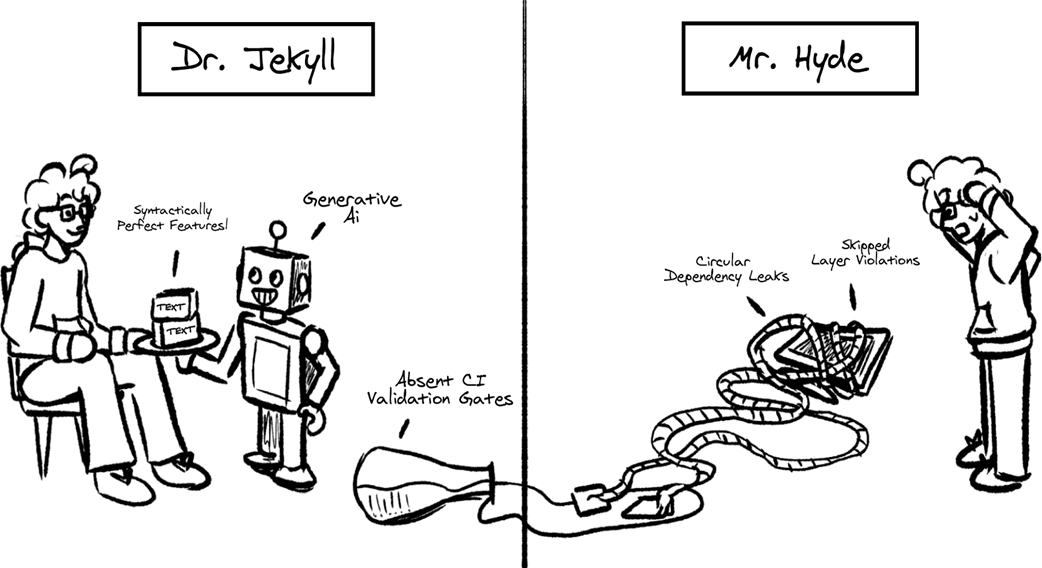
The figure dramatizes how unverified release speed can threaten microservice boundaries. section 13.4
