liveBook · Manning

Automation bias

As explained in The Art of AI Product Development

Automation bias is the tendency to favor or accept automated outputs without sufficient independent verification.

A user accepts an AI-generated report as correct and makes a harmful decision. That is automation bias: overreliance on an automated output instead of staying alert to possible mistakes. It sits opposite algorithmic aversion, where users distrust AI enough to avoid it altogether. section 10.2.2

Design for calibrated trust rather than either extreme:

  • State relevant limitations, such as when a report generator supports European markets but not other regions. section 10.2.2
  • Use alerts tied to a user’s input when a decision warrants a pause and closer scrutiny. section 10.2.2
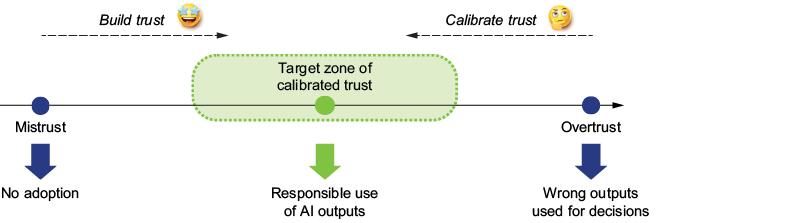
Figure 10.19 On the trust continuum, aim for calibrated trust.
A green arrow pointing to a green line

AI-generated content may be incorrect.

The trust continuum places automation bias beyond the desired middle ground of calibrated trust. section 10.2.2


How The Art of AI Product Development covers it

How deep it goes
Defines the behavior and gives design responses, without analyzing its psychological mechanisms.
Examples
Uses conversational disclaimers and a report generator limited to European markets as examples of caveats.
What you can do after
Apply it via UX caveats and contextual alerts that encourage users to verify doubtful outputs.
How it connects
Connects automation bias to calibrated trust, algorithmic aversion, confirmation bias, and AI caveats.

Also explained in

Compare how 2 books explain automation bias →

Related concepts

This explainer was generated by Manning's knowledge graph from the text of The Art of AI Product Development. The section links point to the parts of the book it draws on.