An automation level classifies how independently an AI application performs a task: it may support human decisions, participate actively, or act with minimal intervention. The progression is gradual, and the right human–AI partnership depends on the task, stakes, and value of human judgment. section 3.3.2
The three broad levels are:
- Assisted intelligence supports and enhances human decision-making without deciding independently. section 3.3.2
- Augmented intelligence combines AI suggestions with human expertise during active decision-making. section 3.3.2
- Autonomous intelligence operates independently, making decisions and taking actions with minimal human intervention. section 3.3.2
Routing versus product strategy
AI can route customer requests to the appropriate service team with high confidence. Choosing which product features to build benefits from AI-generated creative stimulation and market context, but human stakeholders still weigh the decision. section 3.3.2
Figure 3.10 AI applications with different degrees of automation
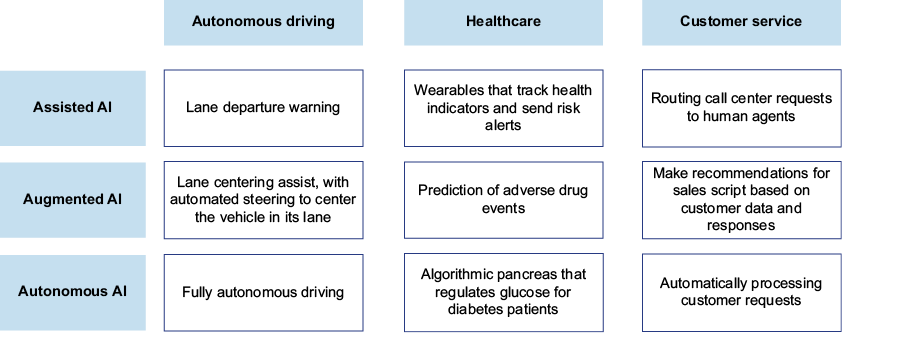
Compare how assisted, augmented, and autonomous applications distribute decision-making between AI and people. section 3.3.2
Figure 3.11 Automation degrees in autonomous driving by SAE International (Source: SAE Levels of Driving Automation [www.sae.org/blog/sae-j3016-update])
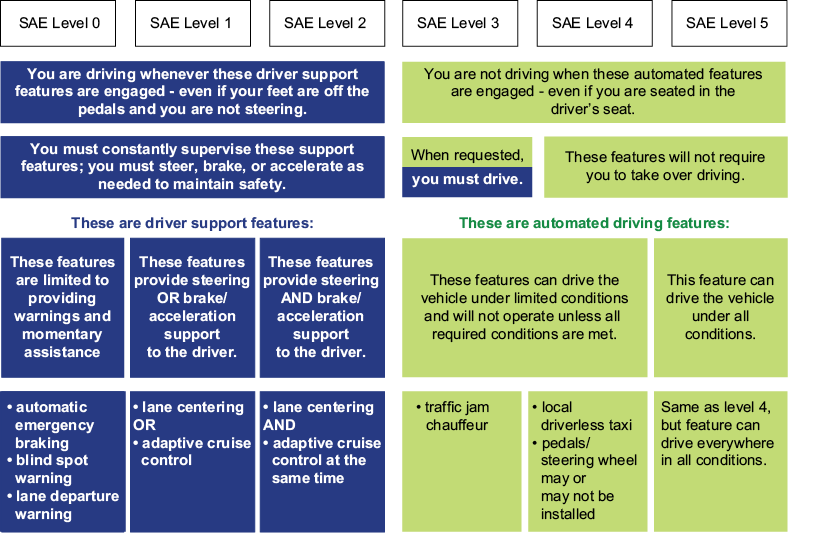
Use the SAE autonomous-driving framework to view automation as a graduated scale from no automation to full automation. section 3.3.2
