An autoscale rule combines a condition with an action that changes runner capacity. It can respond to queued jobs, scheduled demand, or both. section 7.2.1
Common scaling-rule strategies include:
- React to job-queue webhooks by creating ephemeral runners on demand and removing them after completion. section 7.2.1
- Maintain standby runners to reduce startup delays while adding capacity as jobs arrive. section 7.2.1
- Scale on a schedule, such as creating 100 runners at the start of office hours and scaling down afterward. section 7.2.1
- Combine multiple strategies by configuring several scaling rules with ARC. section 7.2.1
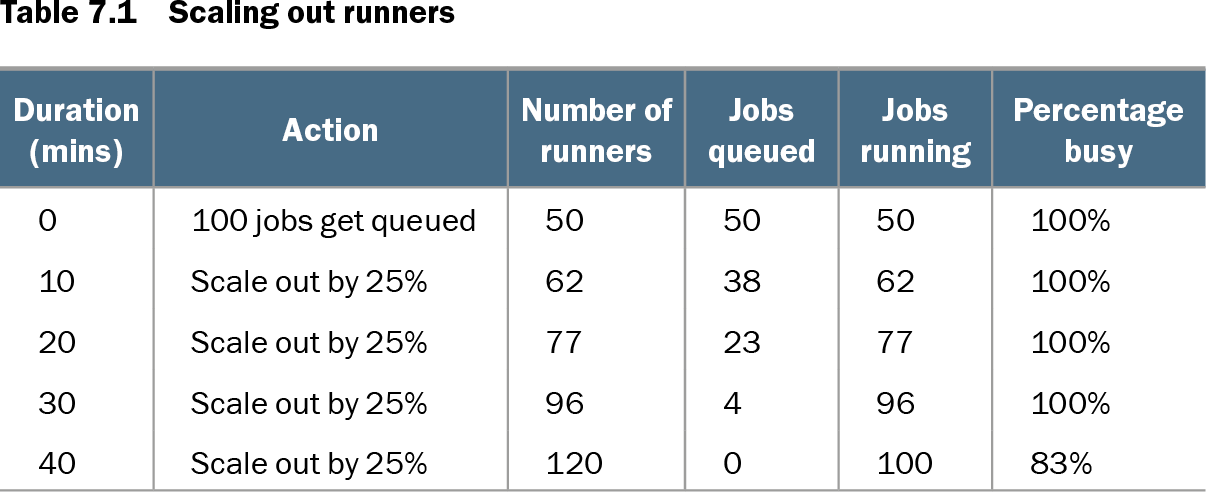
Table 7.1 Scaling out runners (view table figure)
| Duration (mins) |
Action |
Number of runners |
Jobs queued |
Jobs running |
Percentage busy |
|---|---|---|---|---|---|
| 0 |
100 jobs get queued |
50 |
50 |
50 |
100% |
| 10 |
Scale out by 25% |
62 |
38 |
62 |
100% |
| 20 |
Scale out by 25% |
77 |
23 |
77 |
100% |
| 30 |
Scale out by 25% |
96 |
4 |
96 |
100% |
| 40 |
Scale out by 25% |
120 |
0 |
100 |
83% |
A scaling table shows queued jobs, running jobs, runner counts, and utilization as capacity increases by 25% at successive intervals. section 7.2.1