Bacterial chemotaxis is the movement of bacterial cells through chemical concentration gradients, toward attractants or away from repellents. Bacteria use chemotactic signaling to cooperate, self-organize, and adapt to their environment. section 9.1
Chemotaxis matters in swarm intelligence because:
- E. coli uses chemotaxis while foraging for resources. section 9.1
- This collective behavior inspires optimization methods including bacterial foraging optimization and bacterial swarming algorithms. section 9.1
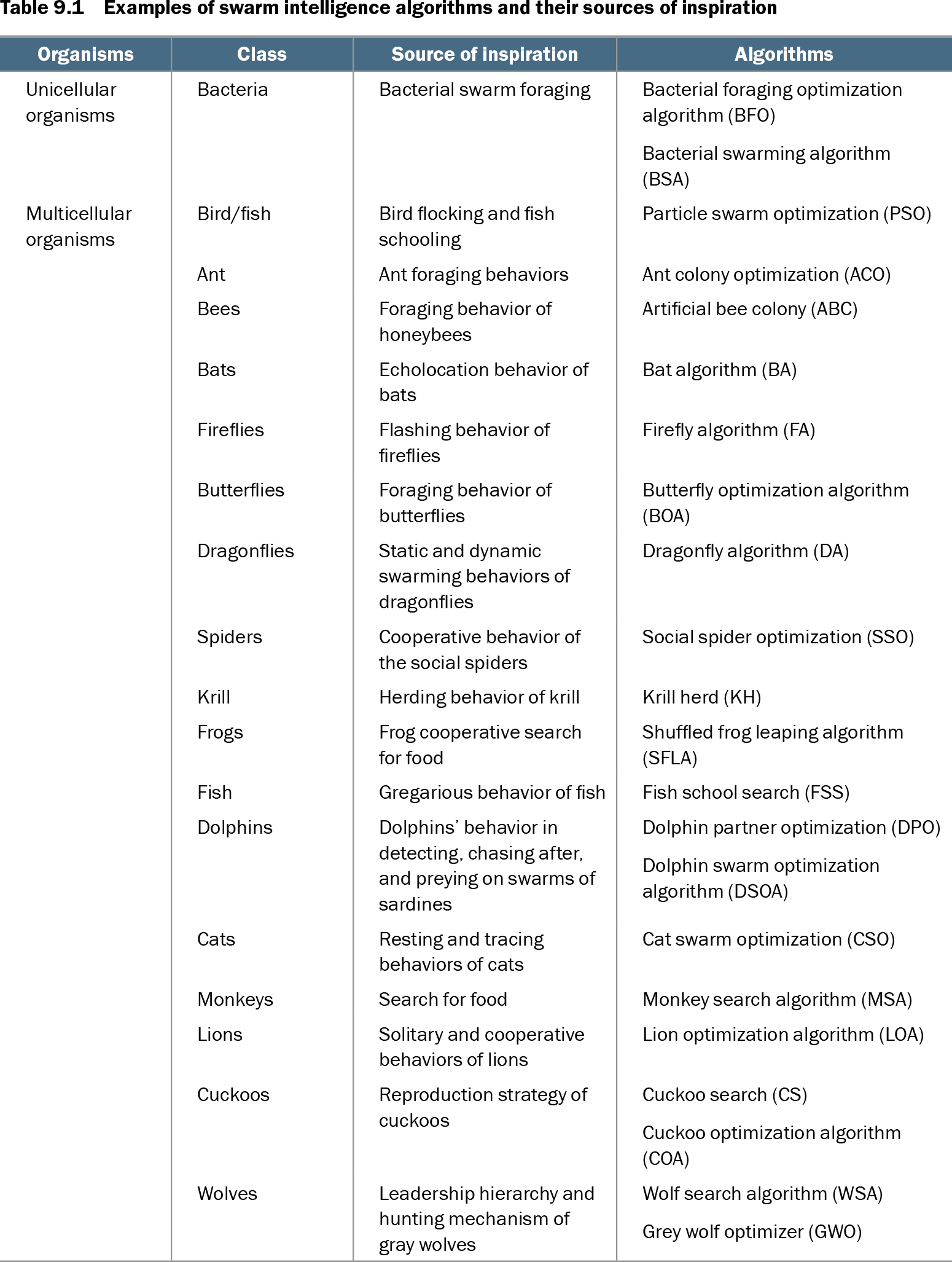
Table 9.1 Examples of swarm intelligence algorithms and their sources of inspiration (view table figure)
| Organisms |
Class |
Source of inspiration |
Algorithms |
|---|---|---|---|
| Unicellular organisms |
Bacteria |
Bacterial swarm foraging |
Bacterial foraging optimization algorithm (BFO) Bacterial swarming algorithm (BSA) |
| Multicellular organisms |
Bird/fish |
Bird flocking and fish schooling |
Particle swarm optimization (PSO) |
| Ant |
Ant foraging behaviors |
Ant colony optimization (ACO) |
|
| Bees |
Foraging behavior of honeybees |
Artificial bee colony (ABC) |
|
| Bats |
Echolocation behavior of bats |
Bat algorithm (BA) |
|
| Fireflies |
Flashing behavior of fireflies |
Firefly algorithm (FA) |
|
| Butterflies |
Foraging behavior of butterflies |
Butterfly optimization algorithm (BOA) |
|
| Dragonflies |
Static and dynamic swarming behaviors of dragonflies |
Dragonfly algorithm (DA) |
|
| Spiders |
Cooperative behavior of the social spiders |
Social spider optimization (SSO) |
|
| Krill |
Herding behavior of krill |
Krill herd (KH) |
|
| Frogs |
Frog cooperative search for food |
Shuffled frog leaping algorithm (SFLA) |
|
| Fish |
Gregarious behavior of fish |
Fish school search (FSS) |
|
| Dolphins |
Dolphins’ behavior in detecting, chasing after, and preying on swarms of sardines |
Dolphin partner optimization (DPO) Dolphin swarm optimization algorithm (DSOA) |
|
| Cats |
Resting and tracing behaviors of cats |
Cat swarm optimization (CSO) |
|
| Monkeys |
Search for food |
Monkey search algorithm (MSA) |
|
| Lions |
Solitary and cooperative behaviors of lions |
Lion optimization algorithm (LOA) |
|
| Cuckoos |
Reproduction strategy of cuckoos |
Cuckoo search (CS) Cuckoo optimization algorithm (COA) |
|
| Wolves |
Leadership hierarchy and hunting mechanism of gray wolves |
Wolf search algorithm (WSA) Grey wolf optimizer (GWO) |
Compare bacterial chemotaxis with other biological sources of swarm-intelligence algorithms, including bird flocking, ant foraging, and honeybee behavior. section 9.1