A balanced Likert scale offers equal numbers of positive and negative response options. Unbalanced choices can steer responses toward one direction, so format selection matters when measuring opinions or feelings. section 6.2.2
Use these criteria when configuring a Likert response format:
- Include a neutral midpoint or an opt-out such as “Unsure/Don’t Know” when respondents may lack an opinion. section 6.2.2
- Choose enough response options to capture meaningful differences without creating confusion or choice paralysis; five to seven options fit most questions. section 6.2.2
NPS as a cautionary example
A 0–10 likelihood scale appears balanced, but its reporting rules are not: scores 9–10 are promoters, 7–8 are neutral, and 0–6 are negative. Thus, a visually balanced scale can produce an unbalanced metric. section 6.2.2
Figure 6.8 Assessment of the NPS question on the appropriate Likert scale criteria
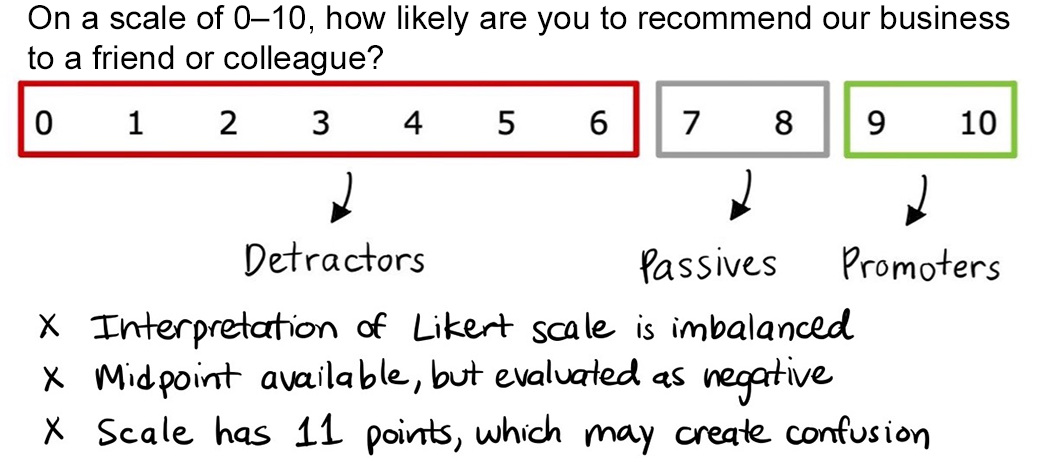
Compare the NPS question against appropriate Likert-scale criteria. section 6.2.2
