A synchronization barrier is the pause between a consumer group's JoinGroup request and its SyncGroup response. Consumers resume processing only after receiving topic-partition assignments, ensuring that each partition has one owner. section 4.3.2
The barrier coordinates rebalancing through these roles:
- The group leader creates assignments and sends them to the group coordinator. section 4.3.2
- All group members send SyncGroup requests and receive their assignments from the coordinator. section 4.3.2
- Eager rebalancing pauses every consumer during reassignment, while incremental cooperative rebalancing keeps unchanged partitions processing. section 4.3.2
Figure 4.13 Rebalancing with the eager or “stop-the-world” approach. Processing occurs on all partition stops until reassigned, but most of the partitions end up with the original consumer.
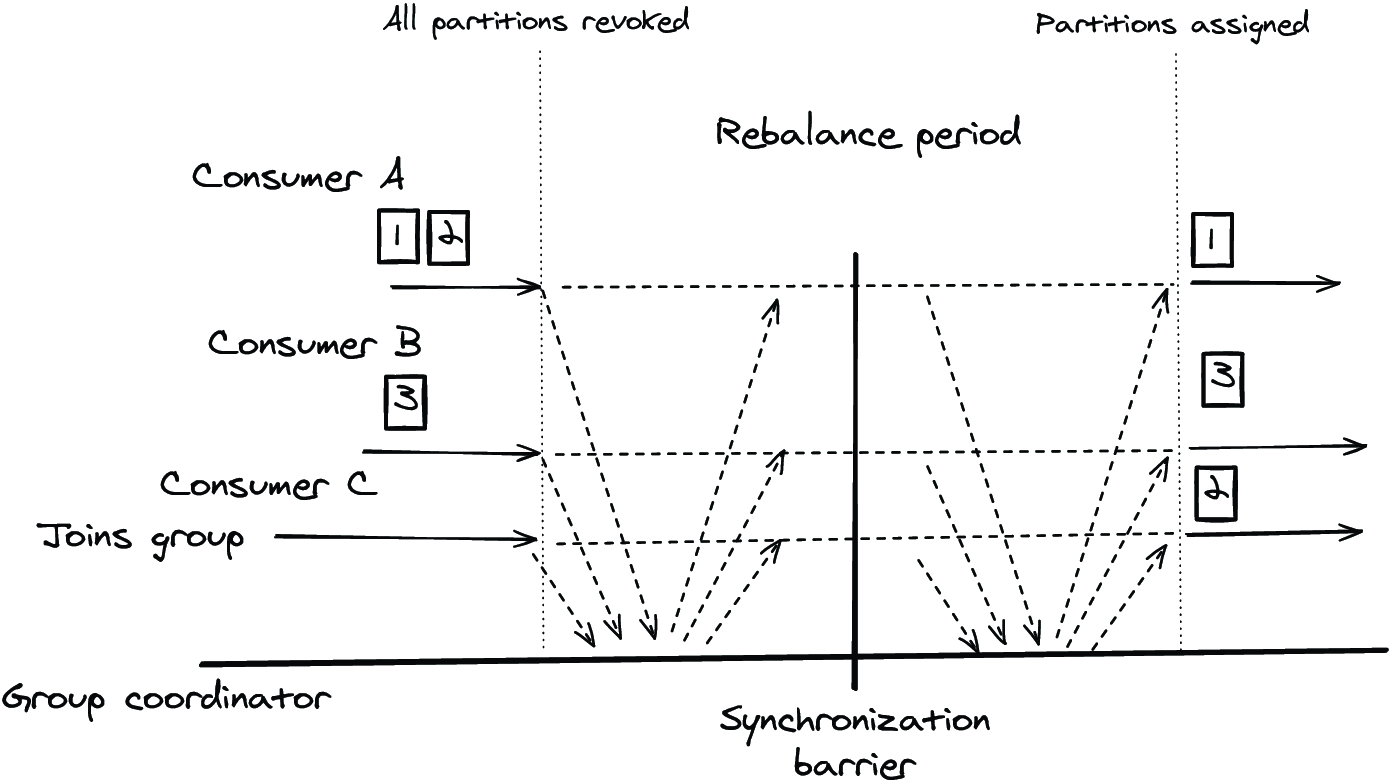
Visualizes the eager or stop-the-world barrier, where all partition processing stops until reassignment completes. section 4.3.2
Figure 4.14 Rebalancing with cooperative approach processing continues and only stops for partitions marked for reassignment.
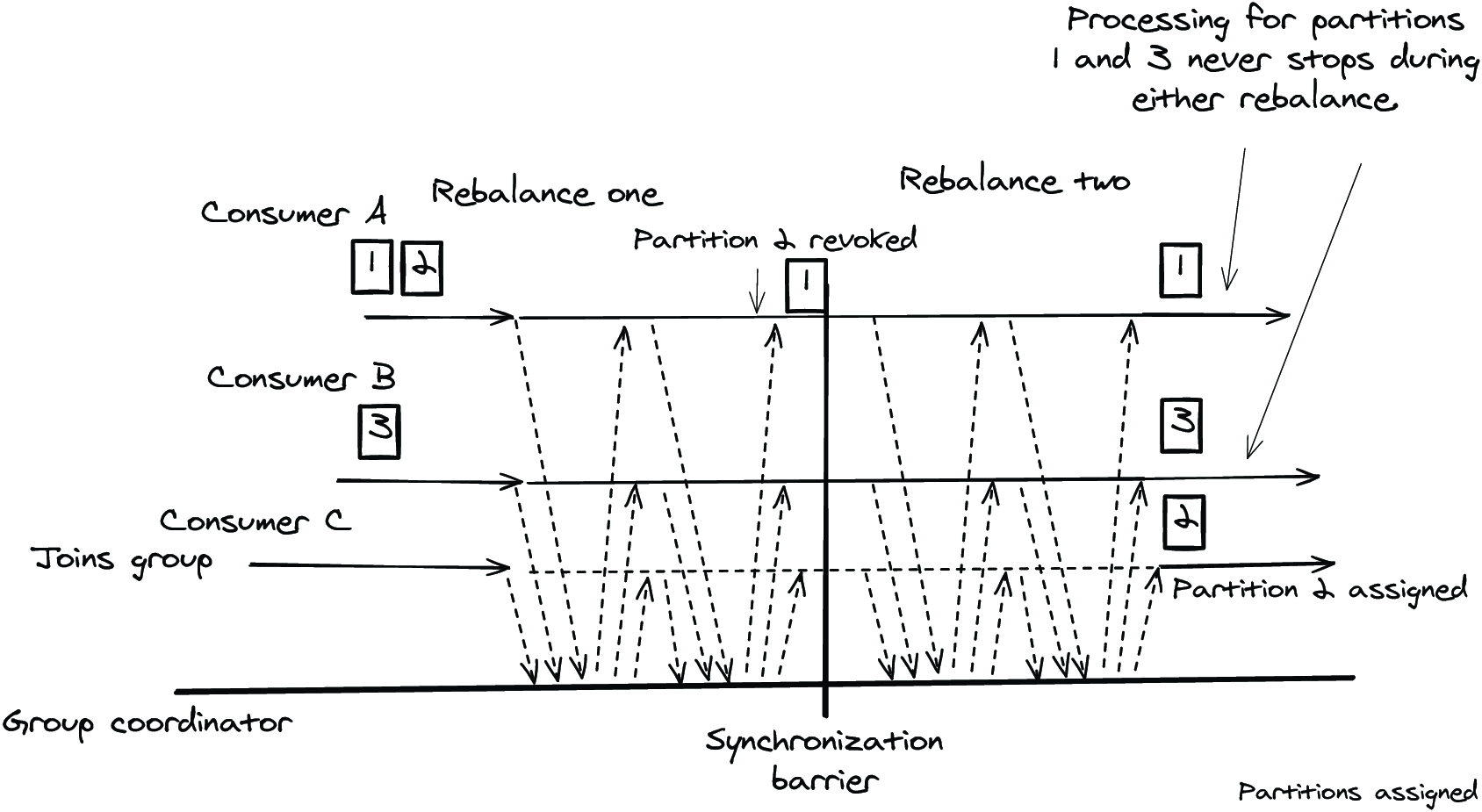
Contrasts cooperative rebalancing, where processing continues for partitions that do not require reassignment. section 4.3.2


