In software development, batch size is the amount of change grouped into one unit of work, such as a pull request or commit. Large batches tend to wait longer for review and make defects harder to find and changes harder to understand or revert. Smaller batches bring feedback sooner and limit rework and merge-conflict risk. section 6.2
Use these questions to judge how a change is flowing:
- Can the change be reviewed and understood without bundling in refactors or opportunistic improvements? section 6.2
- Are tests and feedback arriving frequently enough to identify which change caused a failure? section 5.4.2
- Is batching masking delays or constraints rather than solving them? section 6.7
Shipping-rate change
One approach bundles pricing changes with refactoring, a new abstraction, configuration flags, schema updates, tests, and logging: 18 files and 420 lines added. Another changes only the pricing calculation: 3 files and 40 lines. The smaller pull request narrows the change under review and can surface feedback sooner. section 6.2
Figure 6.10 Batch size comparison for impact on the value stream and feedback flow.
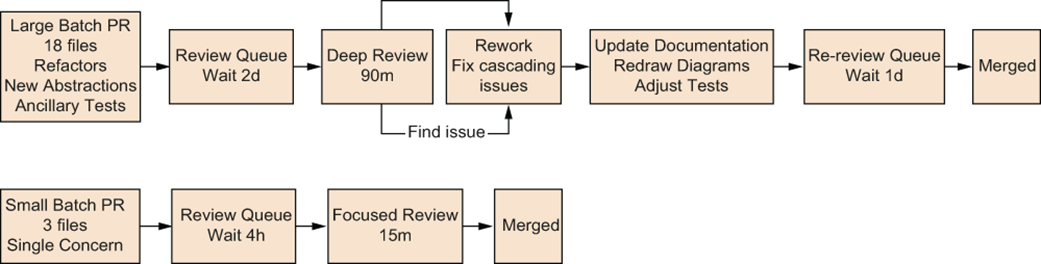
Compare how large and small changes affect value-stream flow and feedback. section 6.2