A bias blind spot is recognizing cognitive biases in other people while overlooking those operating in oneself. In facilitation, that gap can entangle personal and group conflicts, reduce effectiveness, and narrow openness to different perspectives. section 8.3.1
When a strong opinion takes over
A facilitator who believes Kubernetes is rarely useful may quickly label opposing views as wrong and search for confirming disadvantages. Framing the disagreement as a dialogue or debate shifts attention from personal conflict toward ideas. section 8.3.1
Use these practices to reduce the blind spot during group facilitation:
- Notice when a strong opinion is shaping how you interpret another person’s viewpoint. section 8.3.1
- Frame disagreements as dialogue or debate rather than right-versus-wrong contests. section 8.3.1
- Stay open to different perspectives so discussion remains collaborative and productive. section 8.3.1
Figure 8.4 An example of how our bias blind spot can lead to shadows and demons getting entangled with the group in a software design EventStorming session at BigScreen. Not being aware of how your own bias interplays with that of the group might lower your effectiveness as a facilitator.
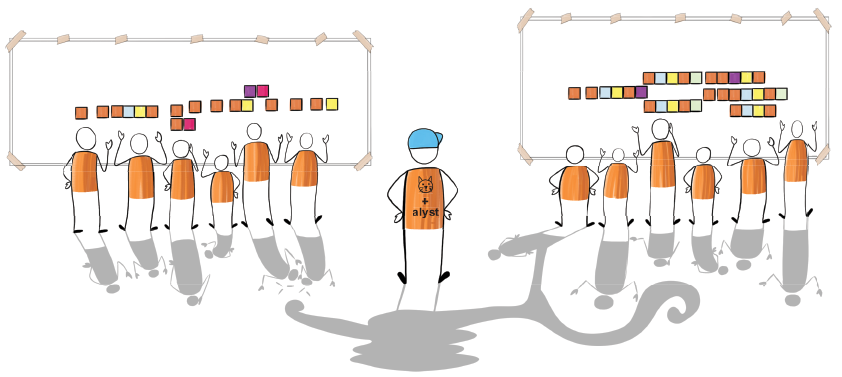
Visualizes how facilitator and group biases can become entangled during a software design EventStorming session. section 8.3.1
